Interval
Work since the previous summary
Five newer turns took the globe from a four-frame interpretation to a genuine, continuously swipable sphere. Follow-up device feedback then drove a larger and faster presentation, natural easing, artwork-space marker anchoring, and finally marker textures that participate in the sphere’s own rotation and curvature. The validated revision was then recorded and published through the normal project workflow.
Direction of travel
How the work evolved.
Each step connects the user’s prompt to the practical change it produced.
Direction corrected
The authored globe became a real sphere
Prompt: Keep the approved illustrated appearance, but restore the expectation that the globe is a sphere which can be swiped freely rather than a set of four selected images.
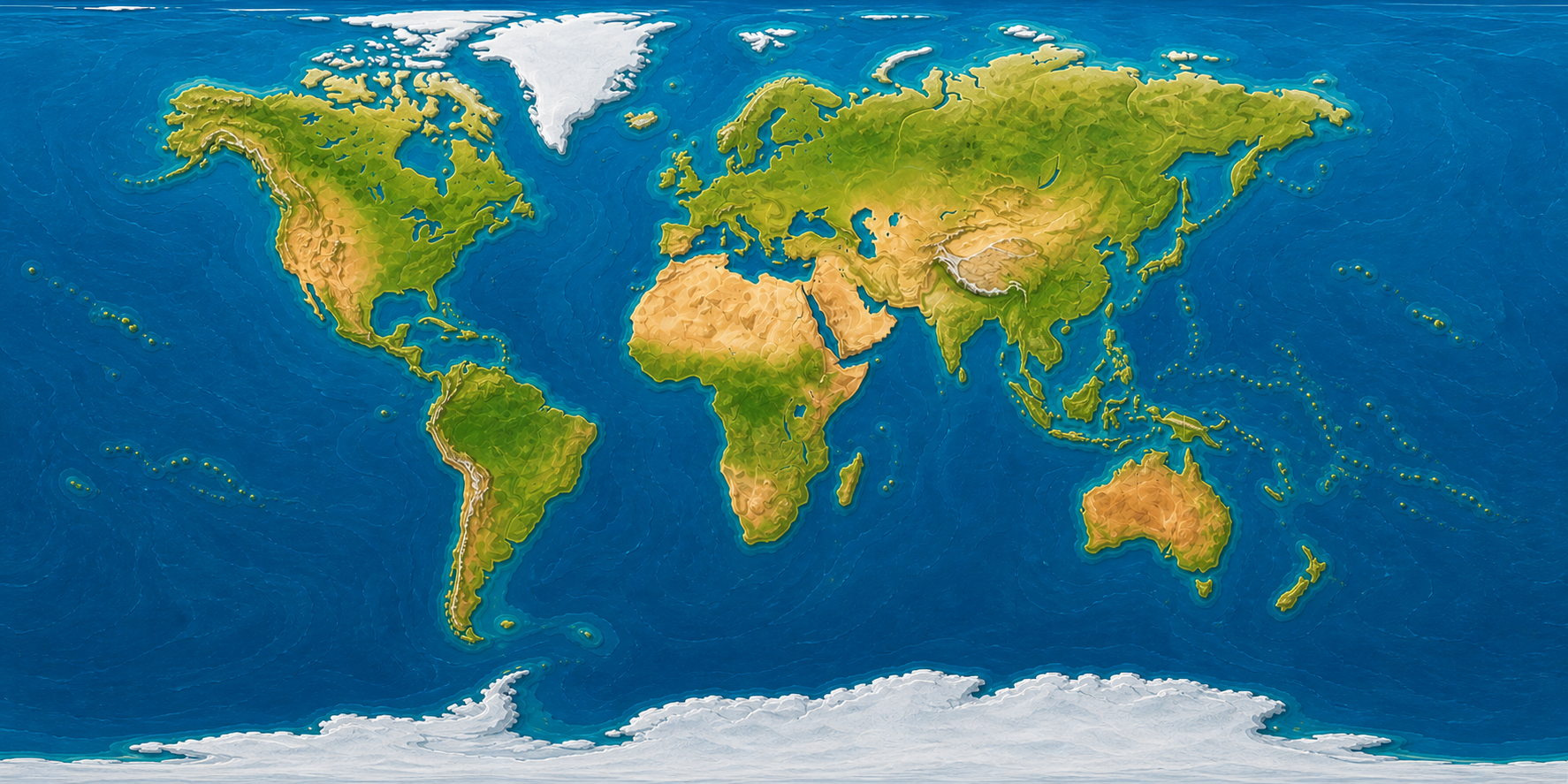
Outcome: A seamless illustrated world texture was derived from the approved artwork and wrapped around a genuine 3D sphere. Horizontal rotation is continuous, vertical tilt is restrained, snapping was removed, and procedural land polygons remain absent from the visible experience.
Interaction refined
The globe grew while swipe latency fell
Prompt: Remove decorative background bubbles, enlarge the globe by another 50%, fix lag during swiping, and make vertical movement follow the finger.
Outcome: The globe now renders at 225% of its nominal size with intentional edge cropping. Live drag state stays local to the globe, unnecessary 3D work is reduced, interaction renders at 60 fps while active, and the vertical direction is corrected.
Motion refined
Markers gained stable anchors and swipes gained momentum
Prompt: Keep reef markers attached to their illustrated locations and replace abrupt quick-swipe stops with a natural ease-out.
Outcome: Every reef uses an anchor authored in the globe texture’s coordinate space and the projection now shares the renderer’s exact sphere radius. Quick swipes continue with bounded cubic ease-out, can be interrupted immediately, and still respect reduced-motion settings.
Rendering restructured
Visible markers became part of the globe surface
Prompt: Eliminate the impression that location markers hover above the planet by making locked and unlocked marker states behave like textures attached to the globe.
Outcome: Separate transparent marker textures are cached for each location and availability state, then composited into the globe material. They now curve, shrink at the horizon, and disappear behind the sphere, while invisible controls preserve generous touch targets and accessibility.
Published
The completed refinement was recorded remotely
Prompt: Publish the finished globe and marker changes through the normal project workflow without performing any additional review or integration step.
Outcome: The coherent location-selection refinement was recorded as one project revision and synchronized through the normal private project transport. The local workspace was confirmed clean, with no further release step performed.
What improved
Improvements made.
Evidence-led changes grouped around the product, implementation, design and working process.
Continuous authored globe
The approved visual language now appears on a real sphere that can stop at any orientation, removing the earlier four-frame limitation without returning to flat procedural geography.
Responsive large-scale interaction
A substantially larger globe remains fluid because drag updates are isolated from the surrounding screen and rendering effort increases only during active interaction.
Natural swipe behaviour
Velocity-based momentum uses a short bounded cubic ease-out, while touch interruption and reduced-motion behaviour keep the interaction predictable and accessible.
Artwork-aligned location anchoring
Marker placement follows reviewed points in the illustrated texture instead of assuming mathematically exact coastlines, preserving the deliberate style-over-cartography trade-off.
Surface-integrated marker states
Available and locked markers are now material pixels on the sphere, so their perspective, curvature, horizon clipping, and visibility agree with the planet beneath them.
Pain points
Friction, constraints and open edges.
Resolved problems are separated from constraints and work that remains open.
The four-frame globe lost continuous exploration
Using approved images as discrete rotations preserved the art but changed the requested interaction. Replacing the carousel with a textured 3D sphere restored free movement while keeping the approved treatment.
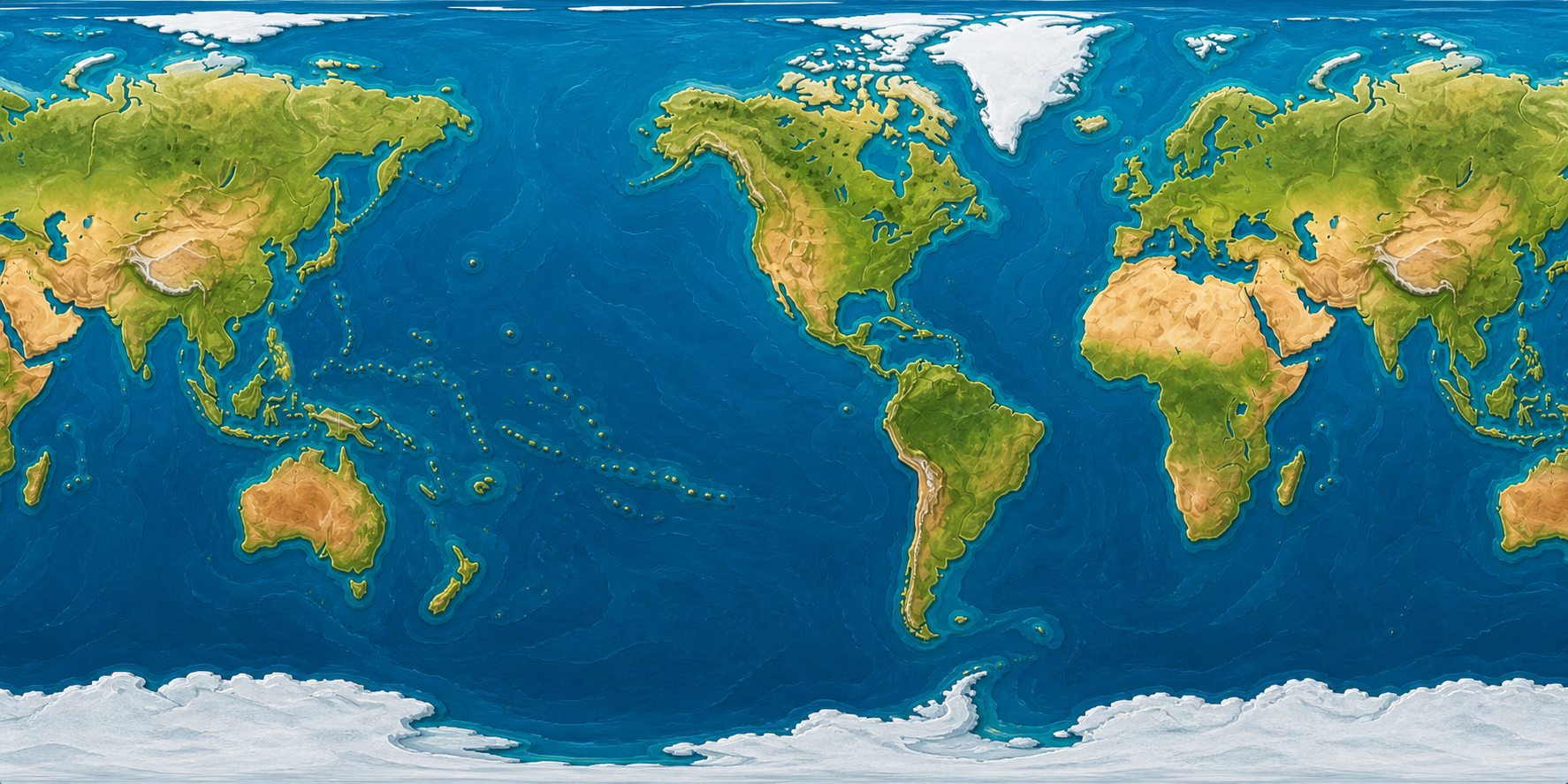
The first generated wrap contained duplicate geography
Moving the texture join only hid the problem temporarily because the first world map repeated part of the landmass. A precise edit produced one complete world and a clean open-ocean wrap suitable for unlimited rotation.
Shared drag state refreshed too much of the screen
Each drag event originally propagated through the wider screen model, creating visible lag. Transient globe-local state now performs live movement and commits only the final orientation.
Screen-space markers still appeared to hover
Correcting marker centres was not enough because camera-facing overlays retained their shape as the globe moved. Compositing them into the material resolved drift, foreshortening, curvature, and rear-surface visibility together.
Outputs & proof
What was delivered and verified.
Each stage was checked in the simulator at multiple globe orientations and backed by the full automated suite and a production-style build. Test coverage increased from 63 to 66 checks as marker projection and momentum behaviours were added, and the final surface-marker implementation passed the complete suite before publication.
Verification record
- The seamless texture was checked through full rotation for duplicate geography, internal joins, orientation, and alignment with painted reef regions.
- The enlarged globe was reviewed with its intentional side cropping, cleared background, corrected vertical drag, and localized 60 fps interaction path.
- Indo-Pacific and Atlantic orientations confirmed that artwork-space anchors remained on the intended painted reef areas throughout rotation.
- Momentum tests confirmed bounded 0.18–0.48 second easing, front-loaded cubic deceleration, interruption on touch, and reduced-motion stopping on release.
- Surface-composited markers were visually confirmed to curve, compress at the horizon, and disappear behind the globe while accessible touch controls remained available.
- The interval concluded with 66 passing automated checks, a successful production-style build, and a clean published project revision.
Key decisions
The approved illustration supplies the visible planet, while code continues to provide genuine continuous sphere interaction.
Illustrated geography is intentionally calibrated with artwork-space anchors instead of forcing mathematically exact longitudes onto stylised coastlines.
The globe is allowed to crop beyond the portrait edges at 225% nominal size because swiping keeps every destination reachable.
Live drag state belongs inside the globe renderer so the rest of the location screen does not refresh for every pointer update.
Visible marker pixels belong in the globe material; separate invisible controls handle touch size and accessibility.
Visual checkpoints
Generated and edited images.
Two texture outputs record the central asset refinement. The first generated wrap proved that the approved material language could transfer to a sphere but exposed repeated geography. The second is the corrected seamless world texture used for continuous rotation.
Next moves & open questions
Current position.
The location selector now presents a large, continuously rotatable illustrated sphere with no ambient bubble layer. Swiping follows the finger, quick gestures ease out naturally, and interaction remains responsive because live movement is isolated locally. Reef markers are composited into the globe material in locked and available states, while invisible accessible controls retain reliable selection. The full checks and production-style build pass, and the completed revision has been published with a clean working tree.