Interval
A new home, economy and collection loop.
The work moved from a static equipment-room proposal through repeated interaction and art-direction refinements into two connected, production-ready experiences: a horizontally browsable dive-base room and a Coral Triangle poster collection. User recordings and screenshots exposed issues that build-only checks had missed, prompting an architectural reset to native scrolling and repeatable simulator interaction tests.
Direction of travel
How the work evolved.
Each step connects the user’s prompt to the practical change it produced.
Defined
Home and economy direction reset
Prompt: Make the home screen a diver's equipment room with a poster wall, dive computer and a gem economy covering earned rewards, optional adverts, travel and collection purchases.
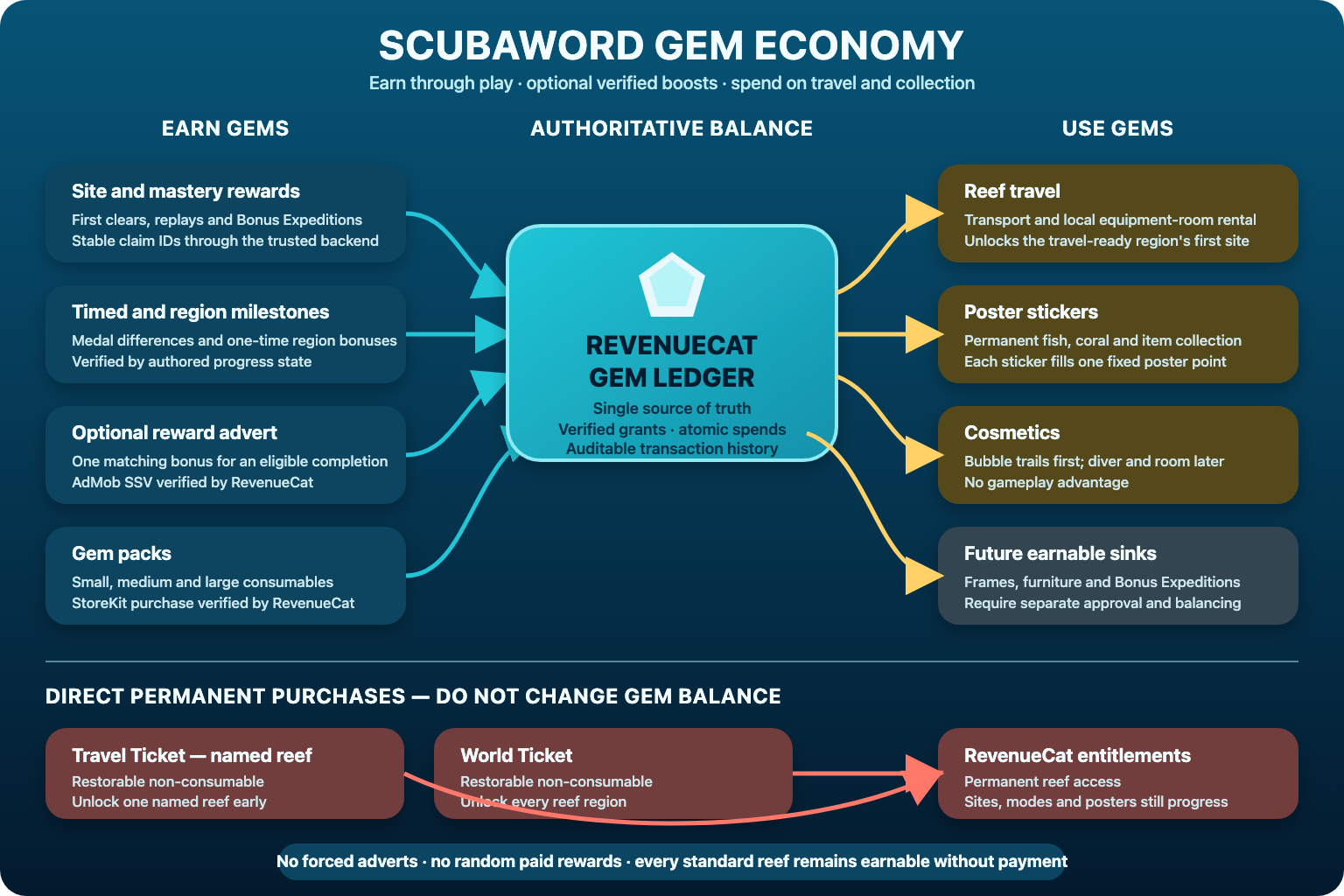
Outcome: A coherent room, poster progression model and gem-flow visual were defined. Standard play remains sufficient, while optional adverts and purchases act as bonuses or shortcuts rather than gates.
Approved
Advert delivery separated from the currency ledger
Prompt: Avoid relying on a beta advert integration while keeping the virtual-currency balance in the chosen commerce service.
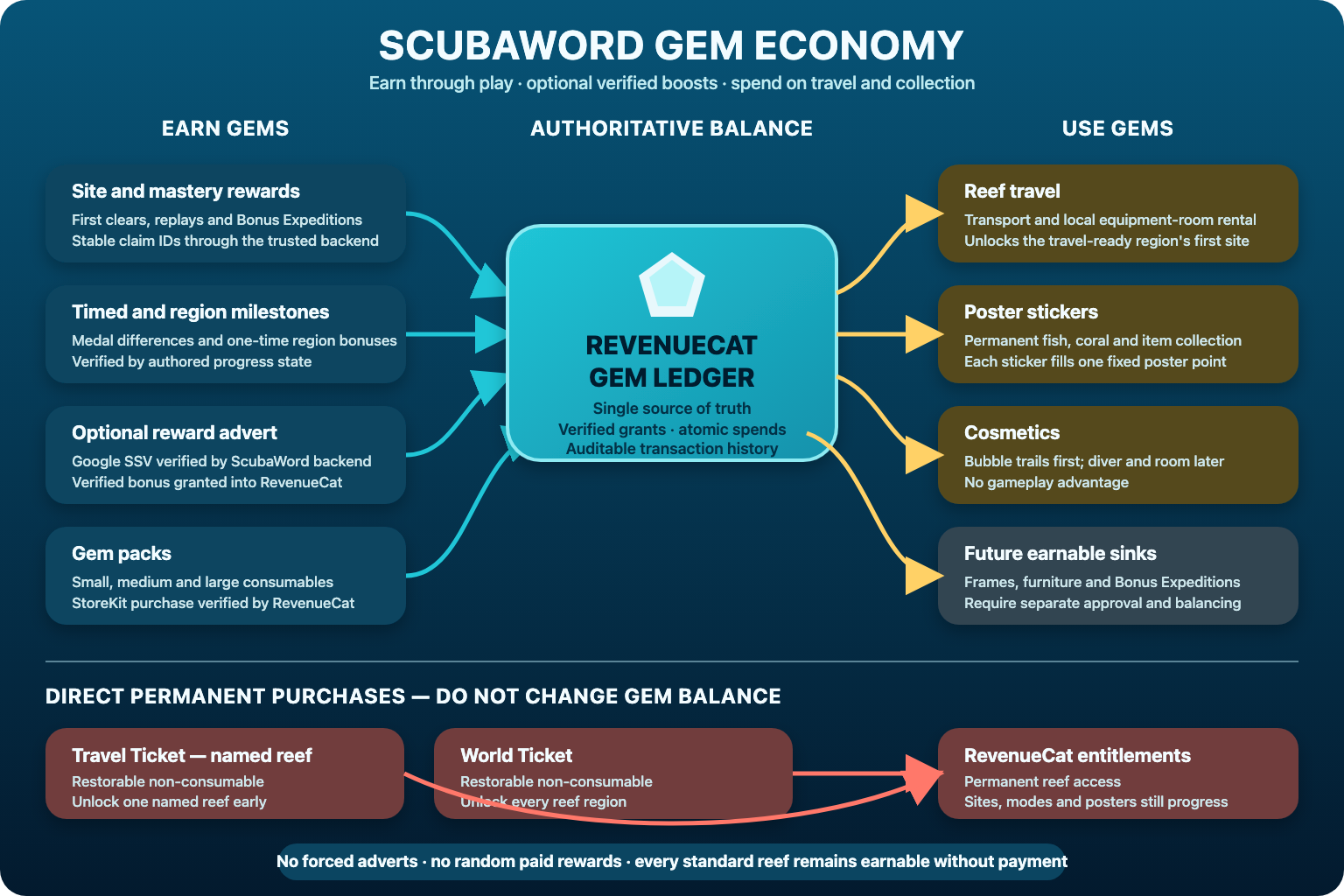
Outcome: The design now keeps advert delivery and server verification separate from the authoritative gem ledger. Client callbacks never grant currency directly, and the dependency sits behind an adapter boundary.
Refined
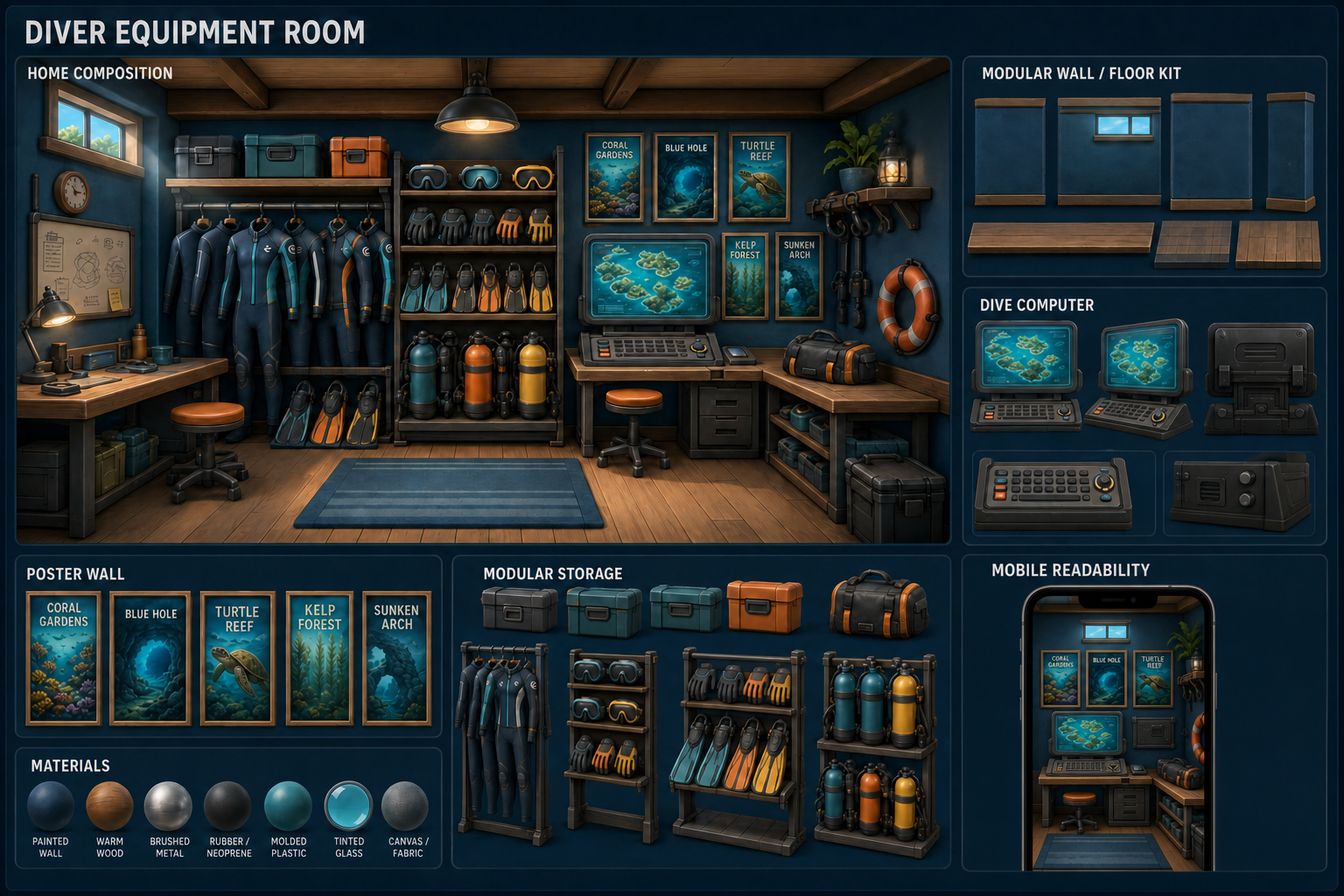
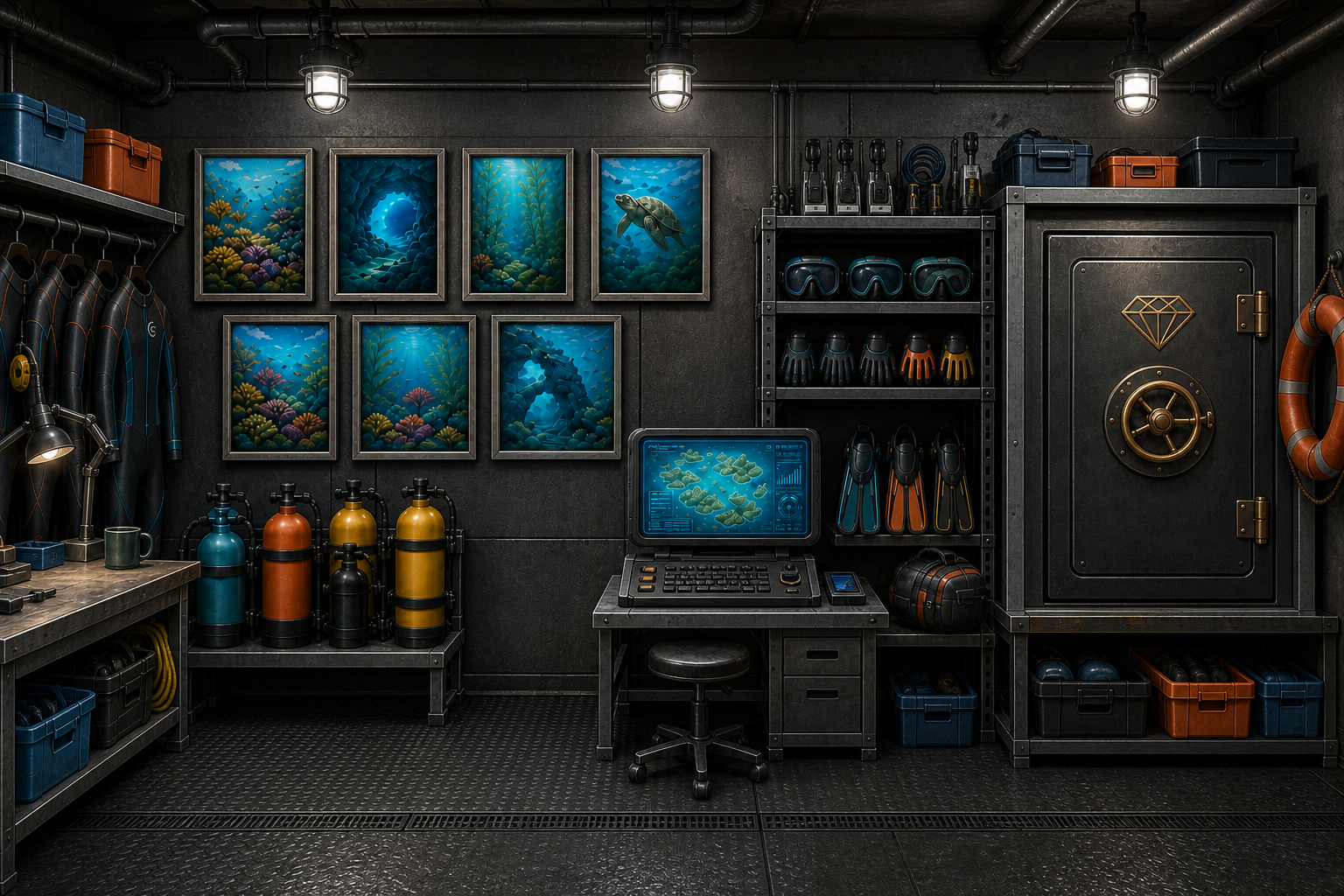
The room became a functional dive base
Prompt: Remove decorative labels and Bubble Trails, show seven posters, add a gem safe, widen the room for horizontal exploration, and avoid a blue or country-club appearance.
Outcome: The final room uses practical gunmetal surfaces, equipment racks, task lighting and an anti-slip floor. It provides seven poster positions, a computer and a safe, with native onboarding prompts and no Bubble Trails functionality.
Rebuilt
Room navigation escaped a fix-and-regress loop
Prompt: Stop black edges, distinguish taps from swipes, keep both ends reachable, use full-screen feature destinations and verify the result visually instead of assuming it works.
Outcome: Custom camera calculations were replaced by a native non-bouncing scroll view. Edge clamping, deliberate feature taps, focused transitions and return behavior were verified through simulator screenshots and five repeatable interaction tests.
Delivered
First-region poster collection built
Prompt: Create a complete first region with realistic marine-life artwork, lock and unlock states, persistent ownership and gem purchasing.
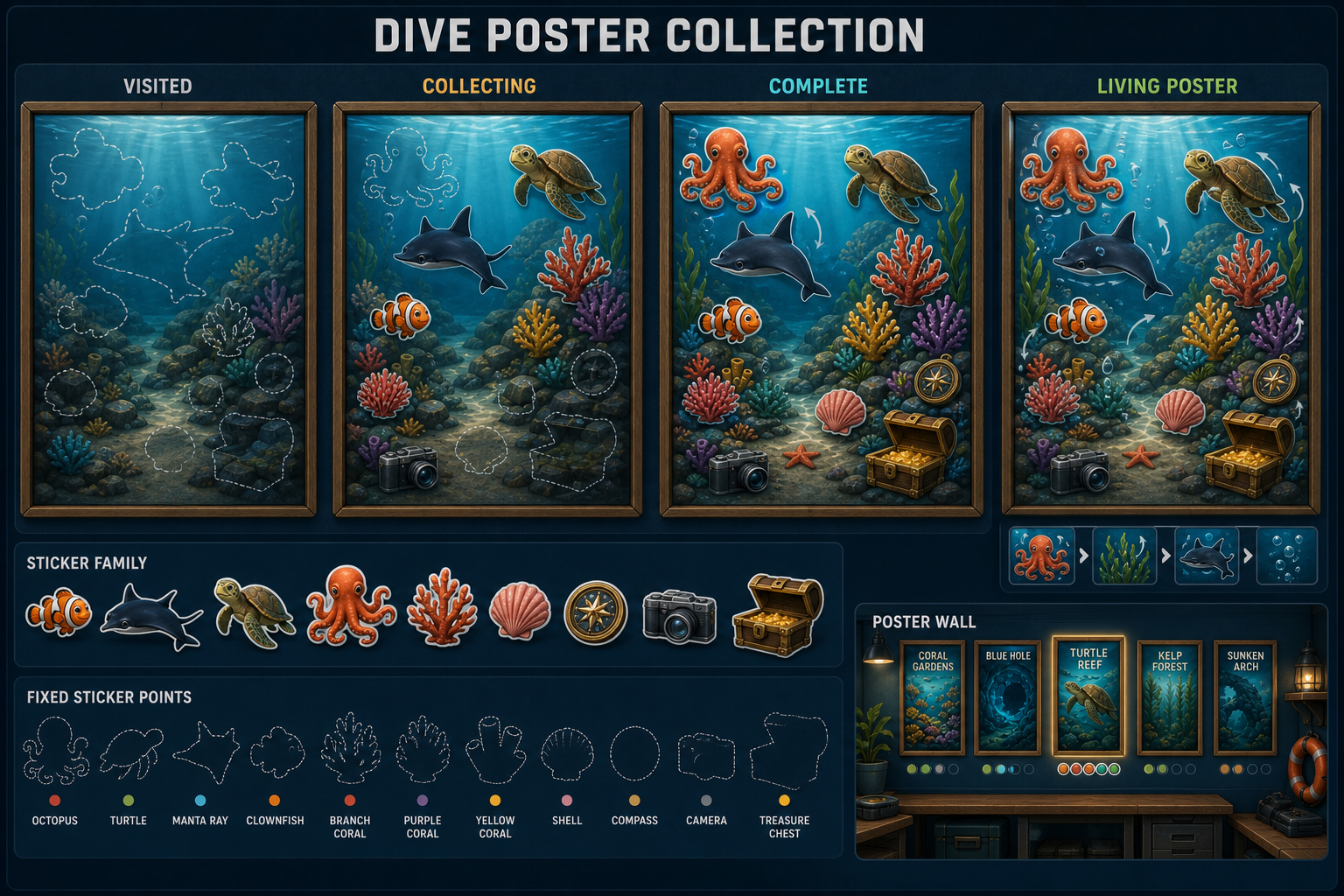
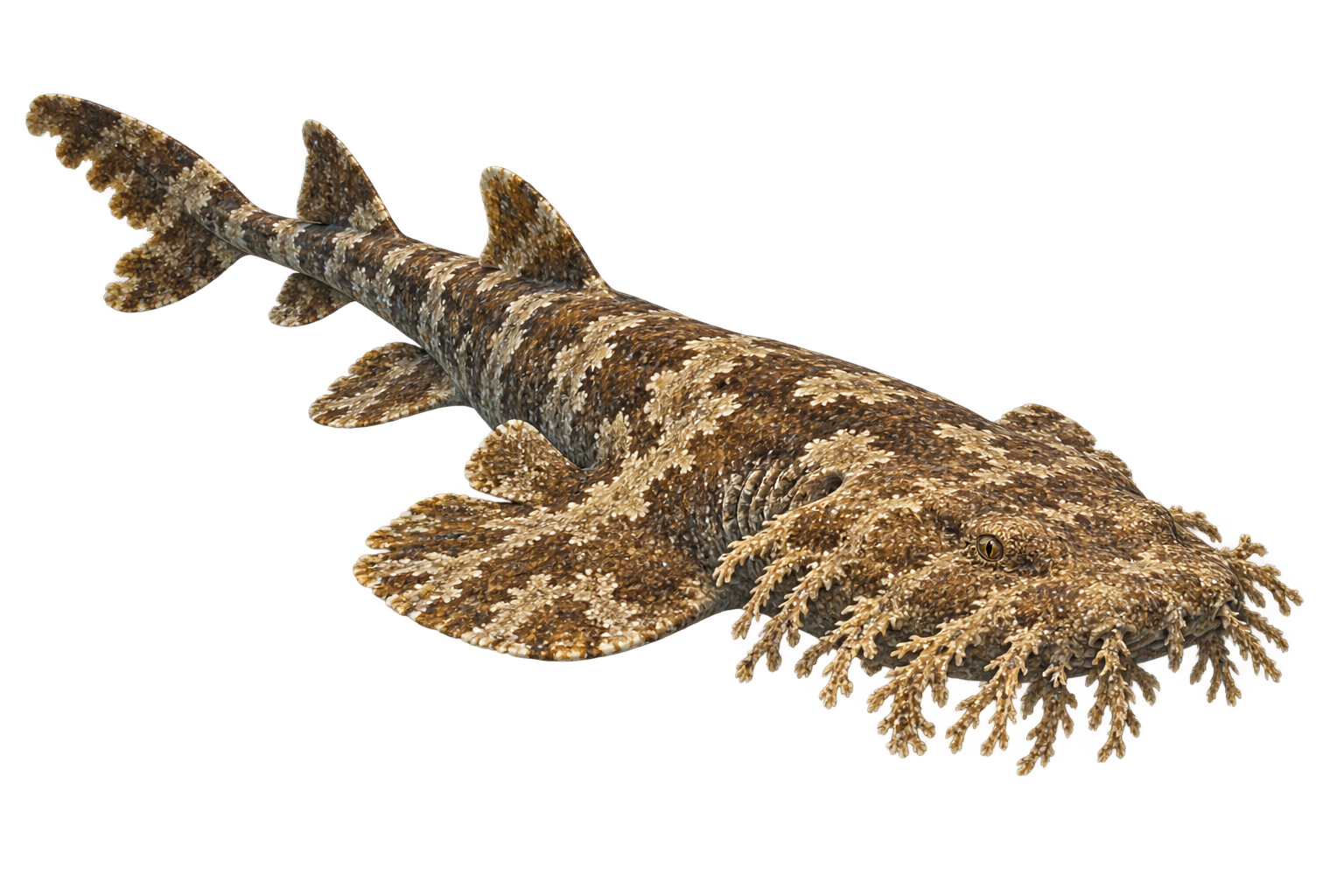
Outcome: The first collection now contains a production reef backdrop and ten anatomically recognizable stickers, milestone reveals, gem-price checks, duplicate protection, save migration and locked future regions.
Polished
Poster layout and ownership feedback applied
Prompt: Use a brighter wide poster, remove decorative framing and badges, keep unpurchased items as silhouettes, keep the poster visible, improve full-screen facts, add owned stickers to the system collection and animate the poster when idle.
Outcome: The collection now uses an edge-clamped panoramic reef, independently scrolling sticker cards, state-specific full-height detail, richer owned-species facts, owned-only system stickers and a gentle 15-second idle pan that stops on interaction.
Integrated
The completed slice was safely integrated
Prompt: Save, publish and merge the finished equipment-room and poster work after verification.
Outcome: The accumulated room and collection work was integrated into the shared main line after the complete 142-test suite passed. Source-control names and identifiers are intentionally omitted from this public record.
What improved
Improvements made.
Evidence-led changes grouped around the product, implementation, design and working process.
Purposeful home environment
The home now communicates a working dive base through its materials and layout, while the seven posters, computer and safe act as clear physical destinations instead of floating menu buttons.
Reliable room interaction
Native scrolling removed the mismatch between rendered scale and camera bounds. Both room edges remain reachable without black gaps, swipes no longer trigger features, and focused areas return to a predictable overview.
Clearer feature entry
Feature taps now zoom deliberately and present concise confirmation text before opening full-screen poster, computer or safe destinations. Dismiss and continue paths are explicit.
Faster globe presentation
Texture work was reduced and cached across views, cutting the amount of image processing required when the destination globe opens.
Fair and auditable gem loop
Gameplay rewards, verified advert bonuses, purchases and spending converge on one authoritative balance, while travel tickets remain permanent shortcuts and normal progression remains available without payment.
Production poster collection
The Coral Triangle collection combines ten realistic species and coral assets with milestone reveals, gem purchases, persistent ownership, richer facts and a seven-region structure.
Responsive poster browsing
The poster remains visible while sticker cards scroll separately; its wide, bright scene pans without bounce or gaps and gently advertises its breadth after 15 seconds of inactivity.
Cleaner project surface
Retired geography fixtures and test-only helpers were removed while the two coordinate checks that still protect current map behavior were retained.
Pain points
Friction, constraints and open edges.
Resolved problems are separated from constraints and work that remains open.
Build success hid visual interaction faults
Early versions compiled but still opened too close, exposed black edges and confused swipes with taps. User recordings made the gap undeniable; the room was rebuilt around native scrolling and simulator UI tests.
Landscape room inside a portrait device
The whole room cannot simultaneously fill a portrait screen, preserve its proportions and show no empty space. The chosen compromise is a height-filling, computer-centred starting view with clear horizontal exploration.
Beta advert coupling
Direct dependence on a beta advert-to-currency bridge was avoided. Advert verification and currency accounting are separate services joined only by a trusted, verified grant.
Existing device build uses an older signing identity
The required shared capability exists for both current targets, but an older installed copy is signed differently. Remove that old copy or align signing before installing the new build on the physical device.
Outputs & proof
What was delivered and verified.
Verification progressed from compile-only checks to direct simulator evidence. The final room navigation was exercised at both edges and across all three hotspots; poster ownership, purchasing, idle movement and saved-state behavior were covered by automated tests and visual inspection.
Verification record
- The app and test targets compiled after the equipment-room and cleanup changes.
- Five simulator UI tests verified the initial room, both horizontal edges, deliberate feature taps and tap-versus-swipe behavior.
- Initial, left-edge, right-edge, computer, poster and safe room states were visually inspected without black gaps.
- Poster locked, available, purchased and completed states were inspected on the simulator.
- The full test suite finished with 142 passing tests at the final handoff.
- The shared capability required by the owned-sticker extension was confirmed for both targets; only the older installed build's signing identity remains to be cleared.
Key decisions
Normal play remains sufficient; adverts and purchases provide optional rewards or shortcuts rather than mandatory progress.
Advert presentation and signed reward verification remain separate from the authoritative currency ledger.
The home uses native scrolling rather than custom camera mathematics.
The room starts at a practical height-filling browse position, not a full-room fit that would create empty areas on portrait devices.
Only a completed tap activates a room feature; beginning a pan cancels activation.
Available but unpurchased poster items remain silhouettes until owned.
Owned marine-life stickers can appear in the system sticker collection; unrevealed or unowned content stays hidden.
Retired map fixtures were removed, but tests protecting live coordinate behavior were preserved.
Visual checkpoints
Generated and edited images.
The retained visual record shows the design journey from early equipment-room and poster references through the approved economy map, the functional wide room, the first reef backgrounds and the complete ten-piece Coral Triangle sticker set. Superseded room-color experiments were not retained as production assets.











Next moves & open questions
Current position.
The functional equipment room and first-region poster collection are implemented, verified and integrated. The current build has 142 passing tests. Physical-device installation still requires clearing or matching the older differently signed app already on that device; the remaining regions and live commerce services have not yet been expanded.