Interval
Independent workstreams, one increasingly coherent product.
The covered intervals began with a practical economy question, expanded into interactive travel and shop concepts, and then used direct feedback to simplify the navigation and choose a distinctive Barlow-led visual system. Native implementation followed for postcards, reef approvals, briefings, settings and the dive log. A final design investigation addressed the poster collection's ecological and scale problems, recommending authored habitat scenes and preserving the user's desired living-reef video payoff. The boundary ends at the latest fully completed work in each session.
Direction of travel
How the work evolved.
Each step connects the user’s prompt to the practical change it produced.
Modelled
The gem economy was tested against the desired replay rhythm
Prompt: Map rewards and costs across sites, reefs and stickers, then find a reason for optional gem packs without turning progression into a money churn.
Outcome: The review exposed that later reefs still opened free and existing sticker prices were light against rewards. It established a 450-gem permanent travel proposal, kept normal play meaningful, and treated optional ads and packs as explicit choices rather than interruptions.
Prototyped
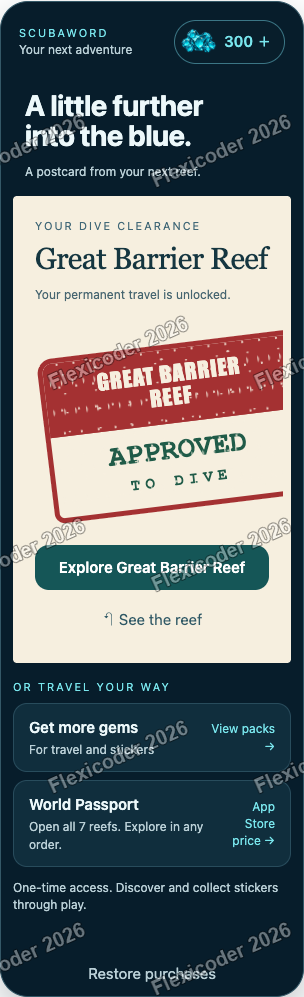
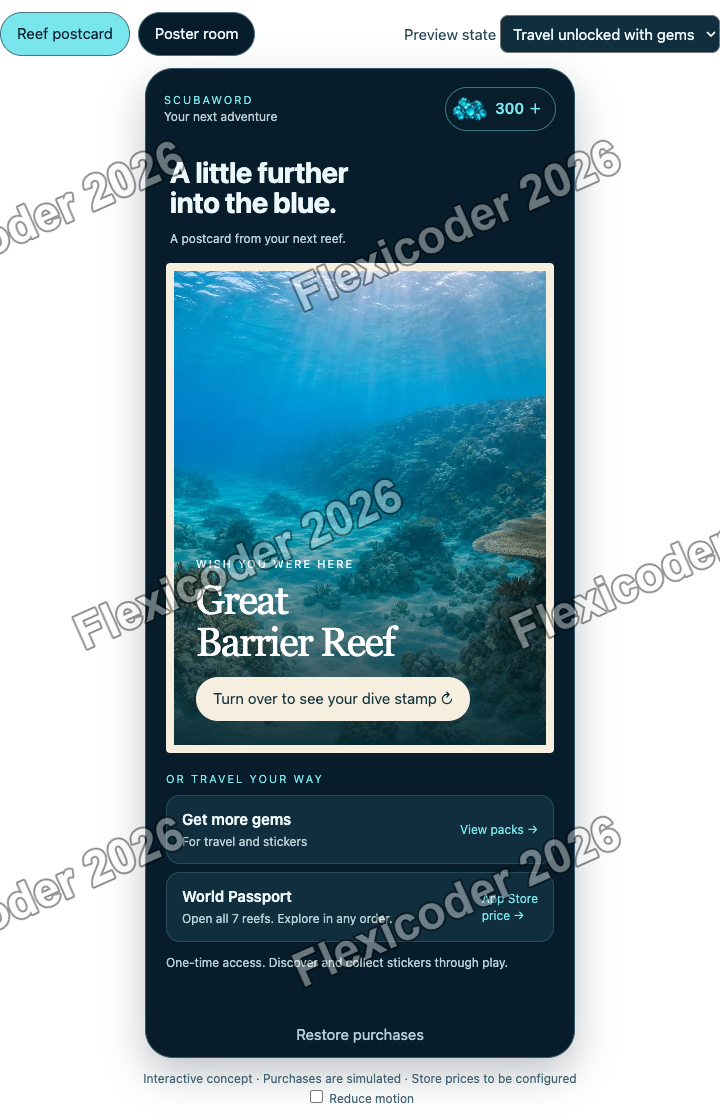
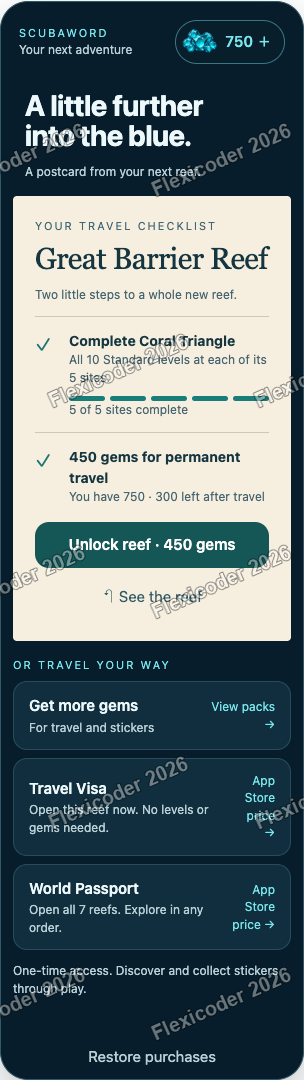
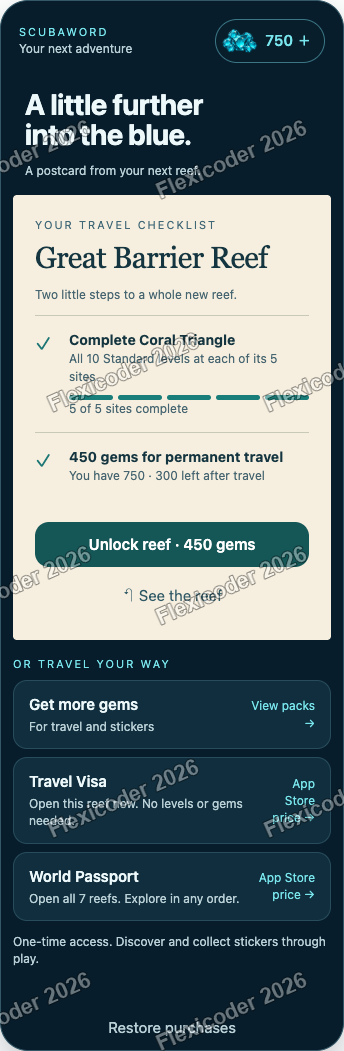
Travel and gem spending became an interactive postcard journey
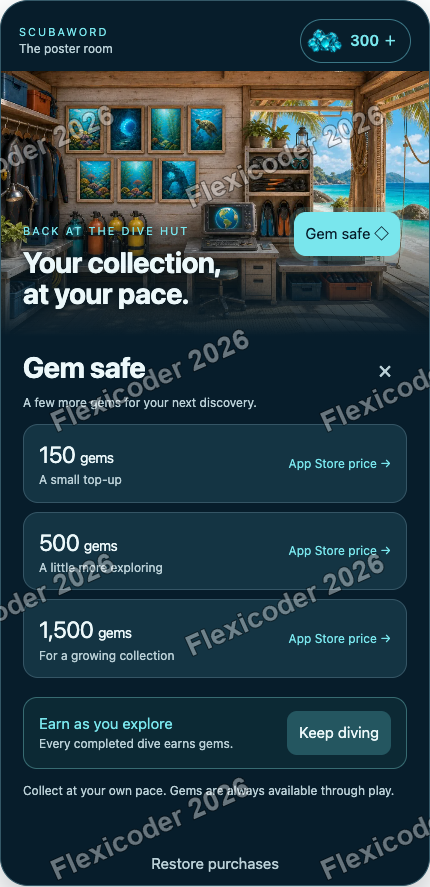
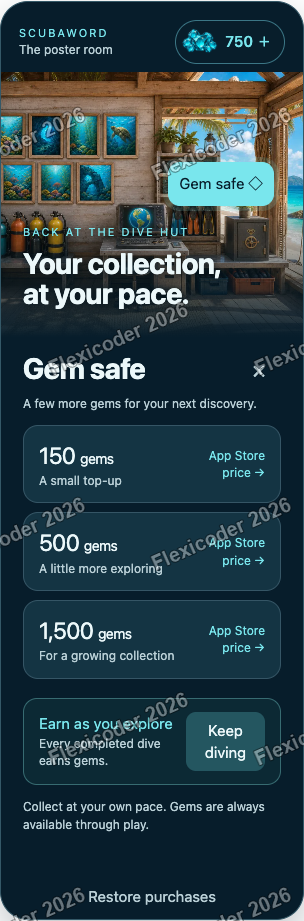
Prompt: Turn the economy into a player-facing flow that explains progress, shortfalls, purchased access and the poster-room gem shop clearly.
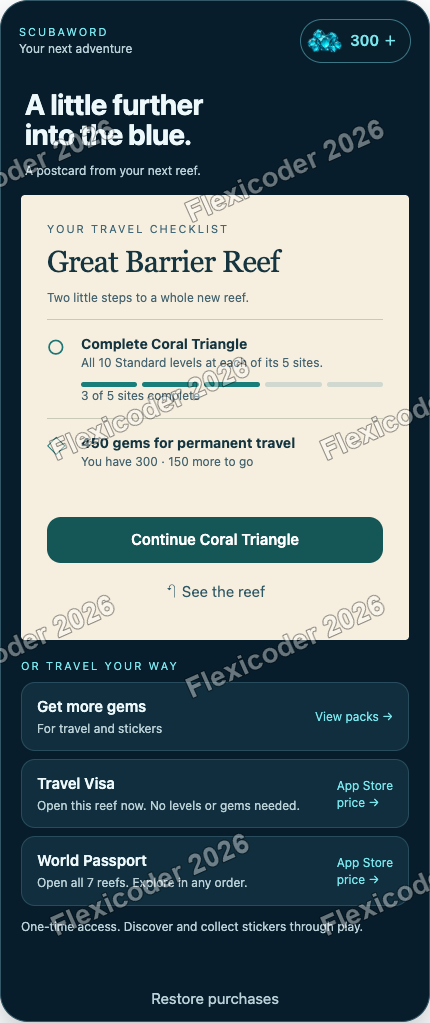
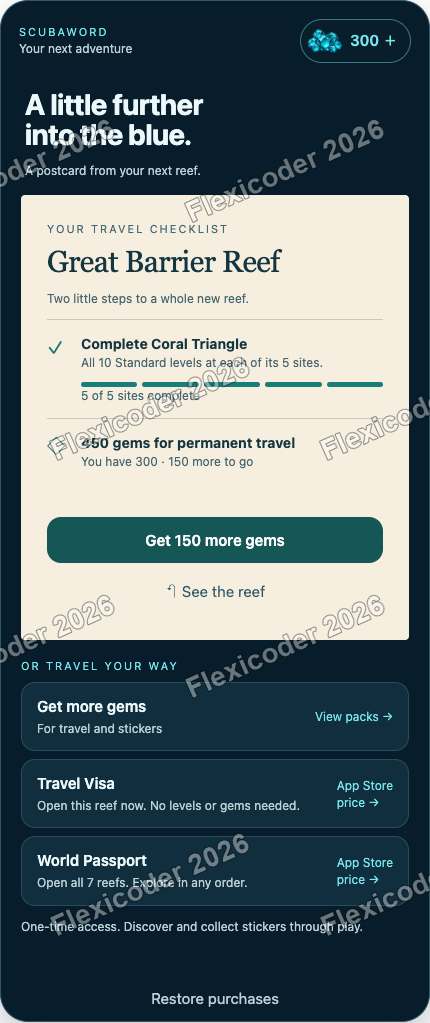
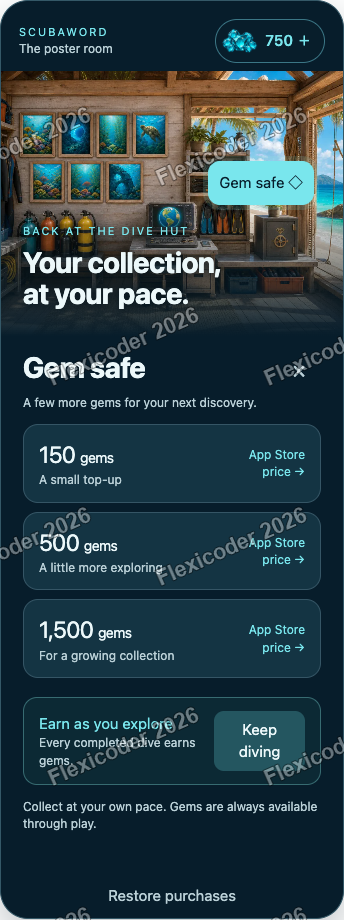
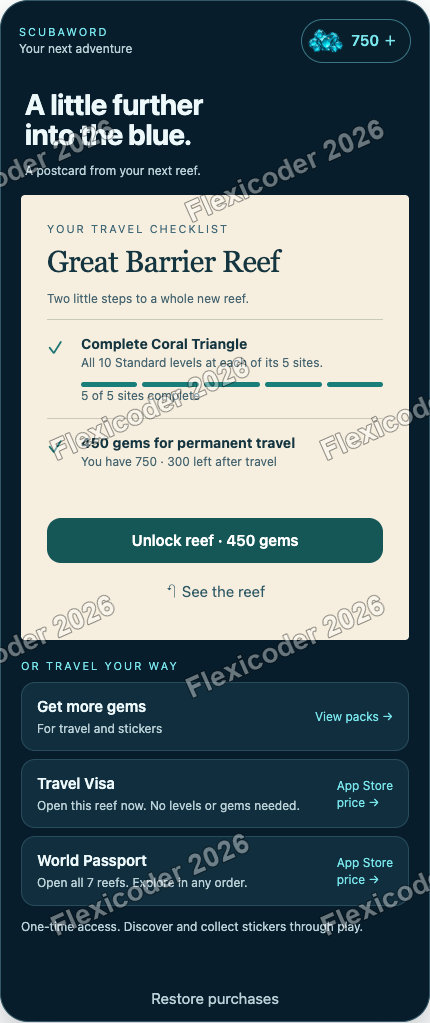
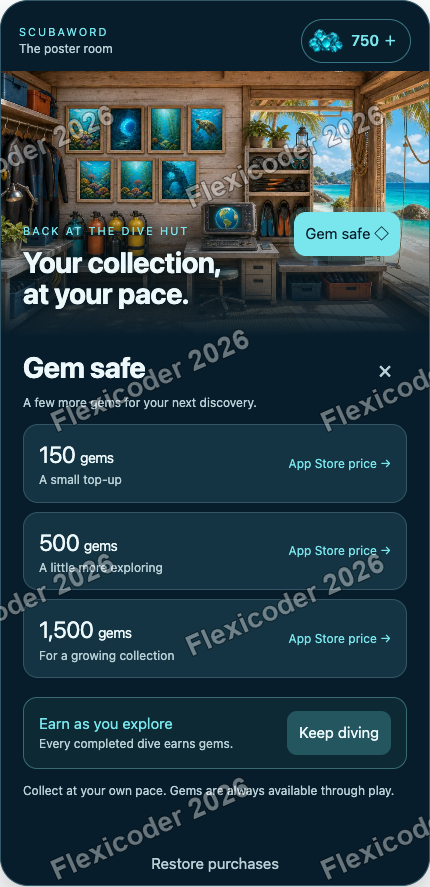
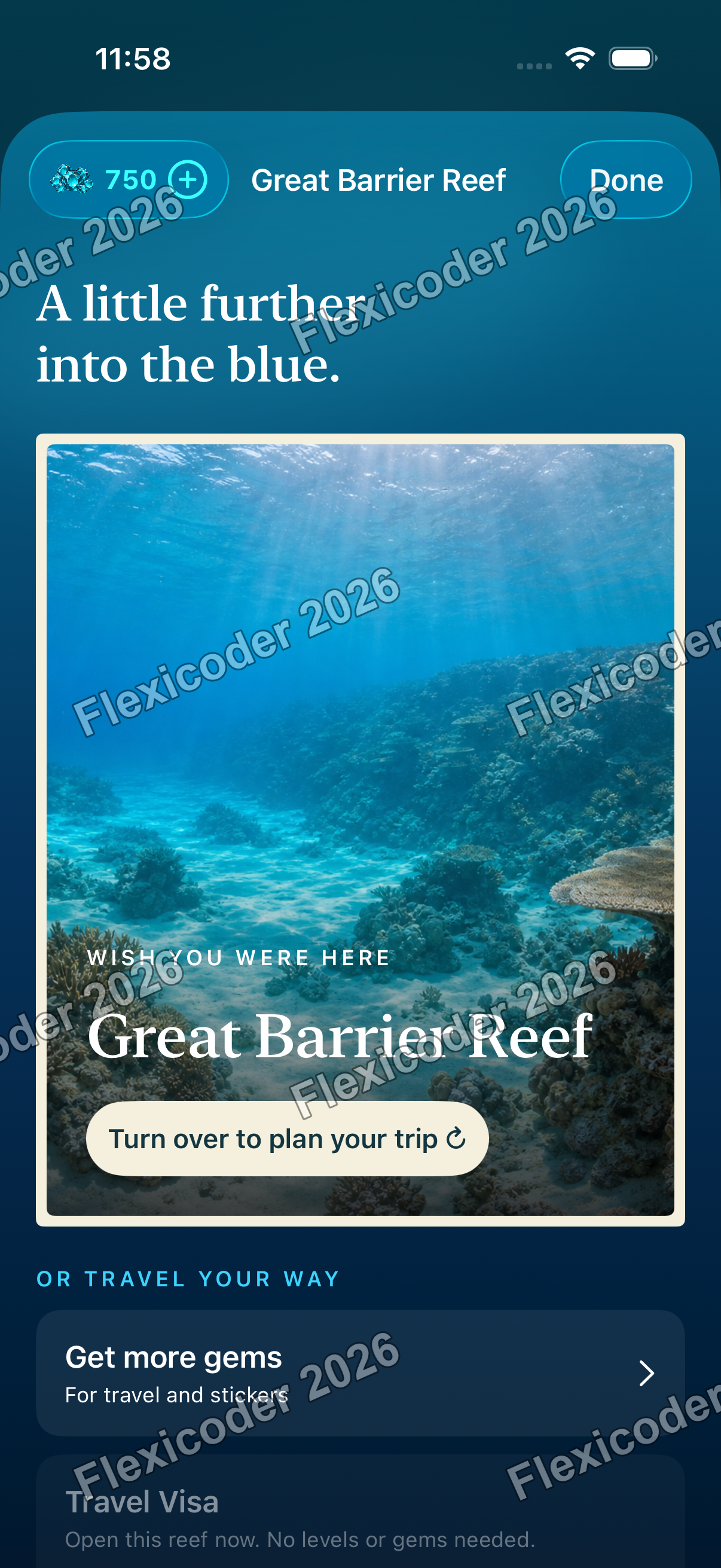
Outcome: Sessions 2 and 3 produced a responsive interactive concept and detailed implementation plan. The design separates access from completion, supports earned travel, named visas and a world passport, confirms spending, preserves context, and never auto-spends newly purchased gems.
Implemented
The approved postcard and gem-travel model moved into the native app
Prompt: Carry the approved photographic postcard, reef approval, gem-safe and early-access rules into production-shaped native screens without breaking existing progression.
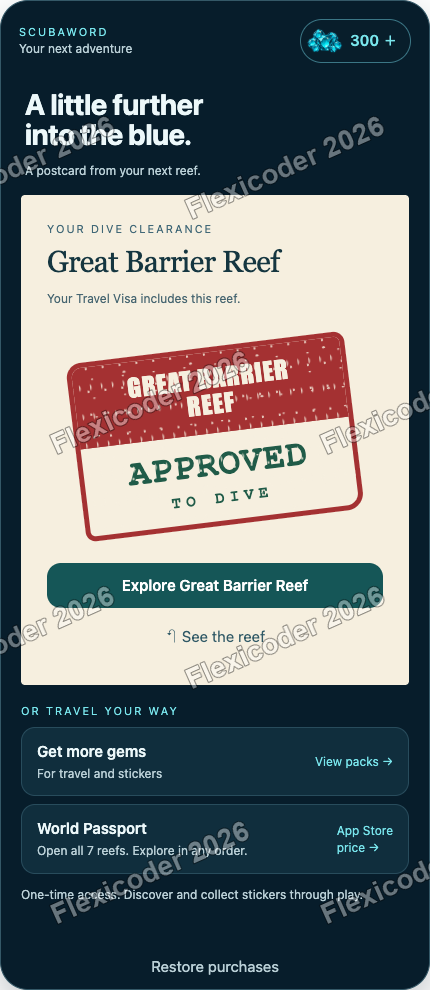
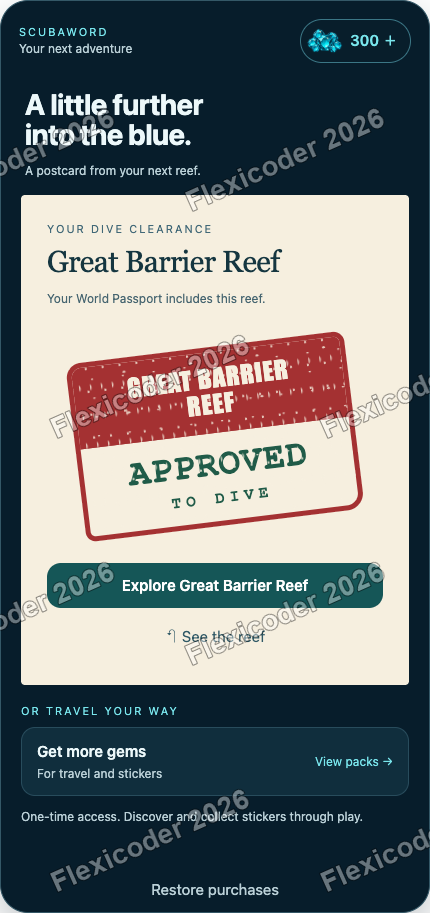
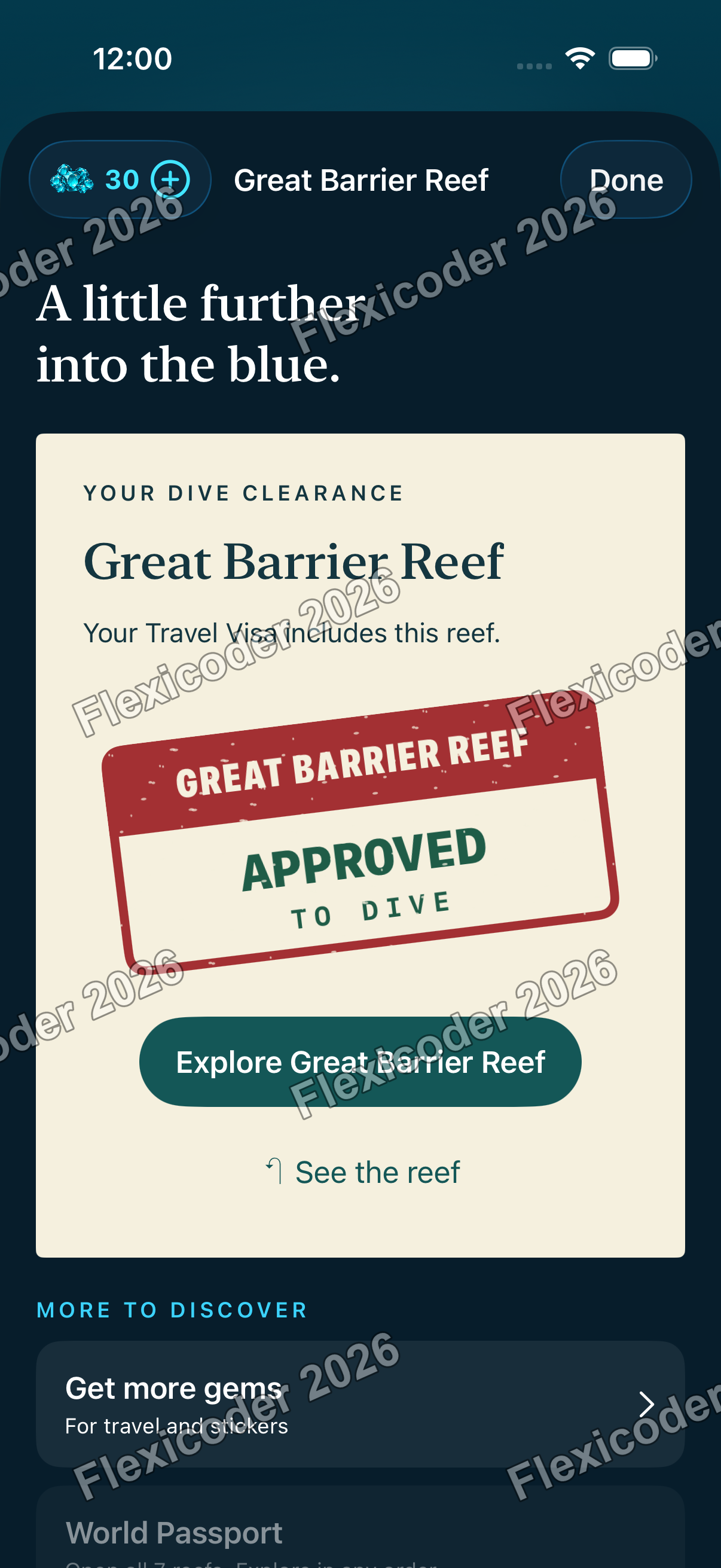
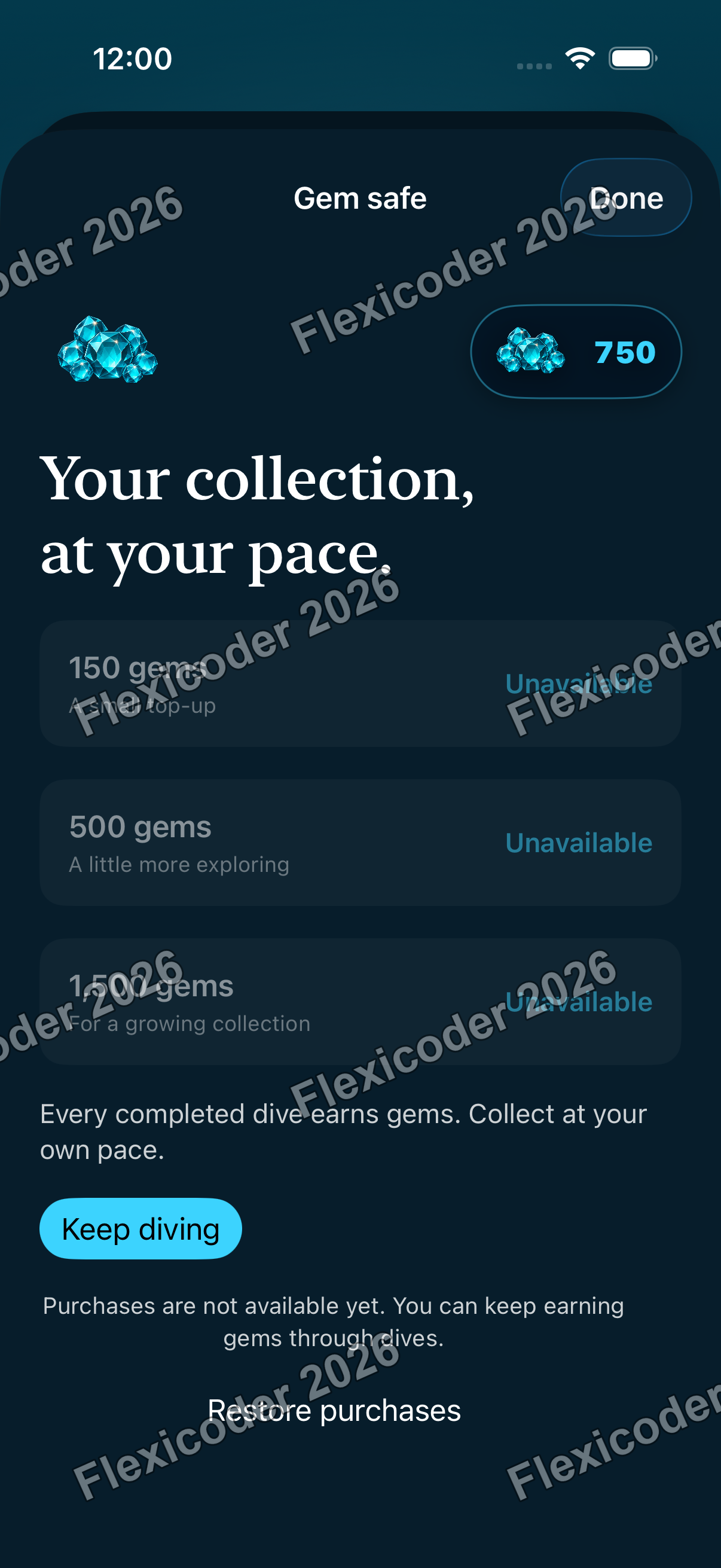
Outcome: Native postcards now flip deliberately, show predecessor requirements, confirm a 450-gem travel spend, distinguish earned and purchased access, and return players to their original context. Release builds still expose no simulated paid products while live commerce remains unconfigured.
Refined
Direct review simplified the room and established a Barlow-led visual system
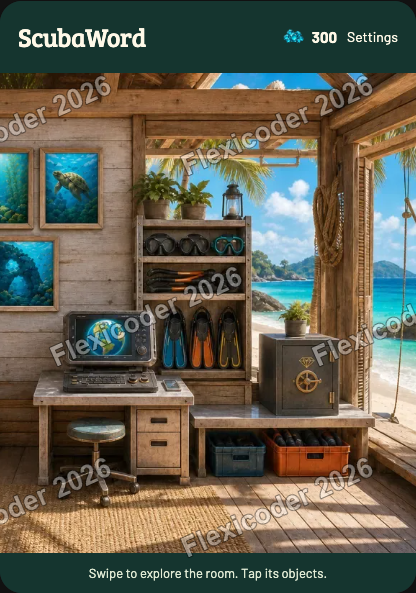
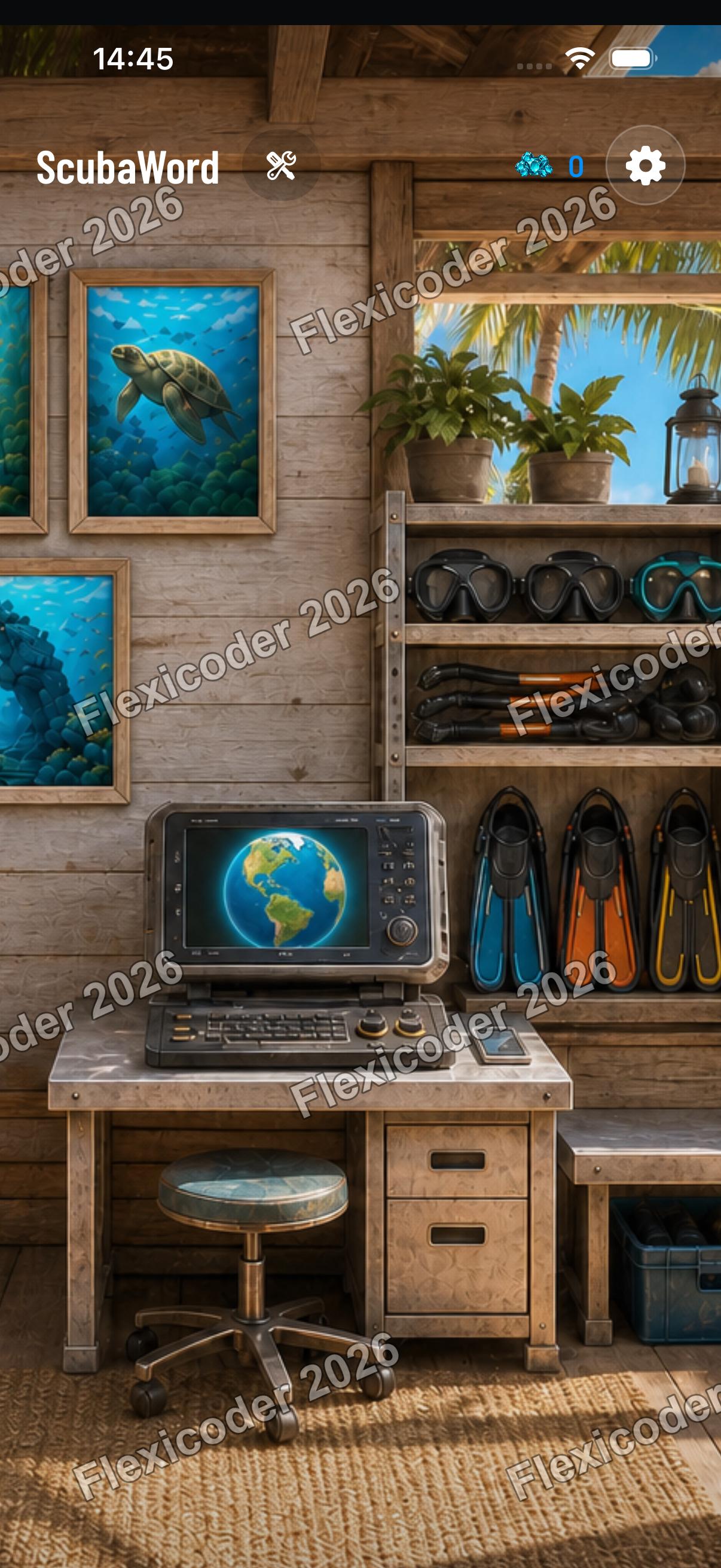
Prompt: Keep the equipment room as an interactive place, remove dashboard-like shortcuts and numbering, clarify the site facts action, preserve the real navigation path, and explore typography with more character.
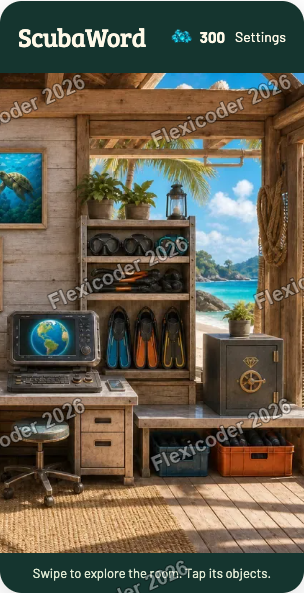
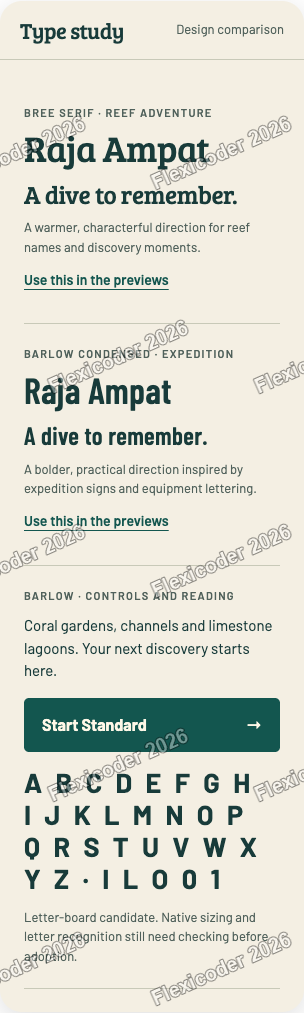
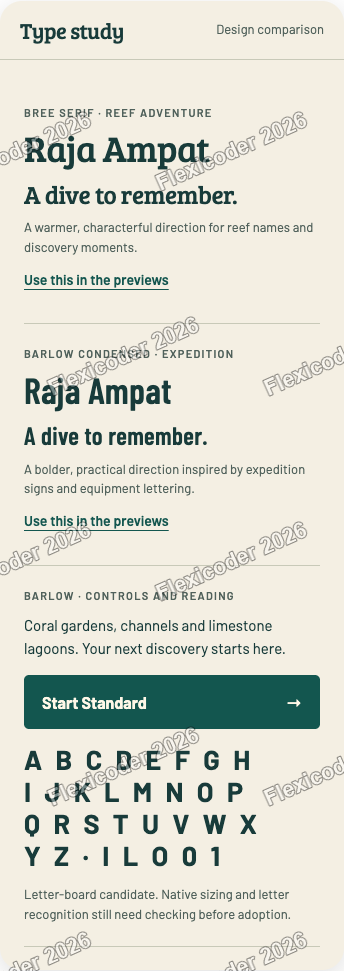
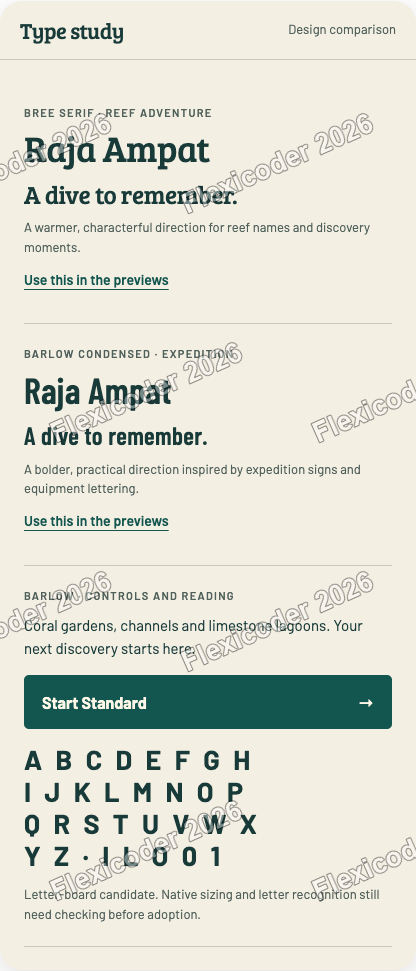
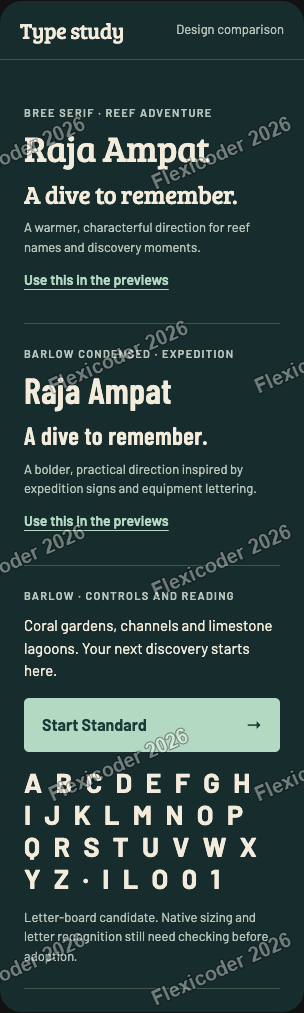
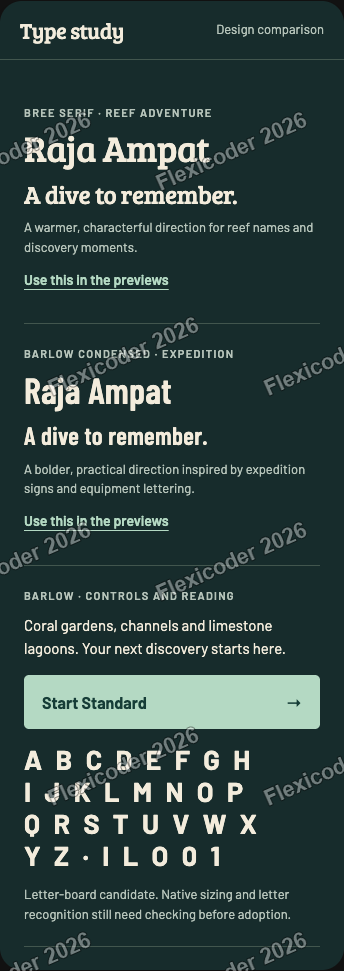
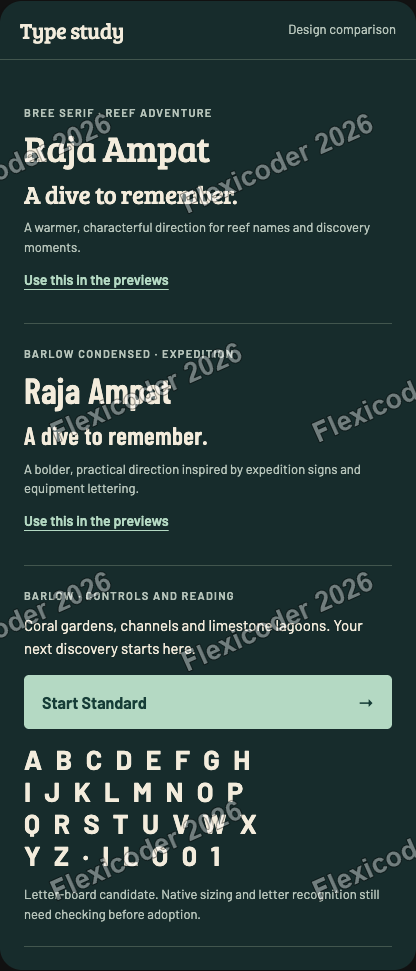
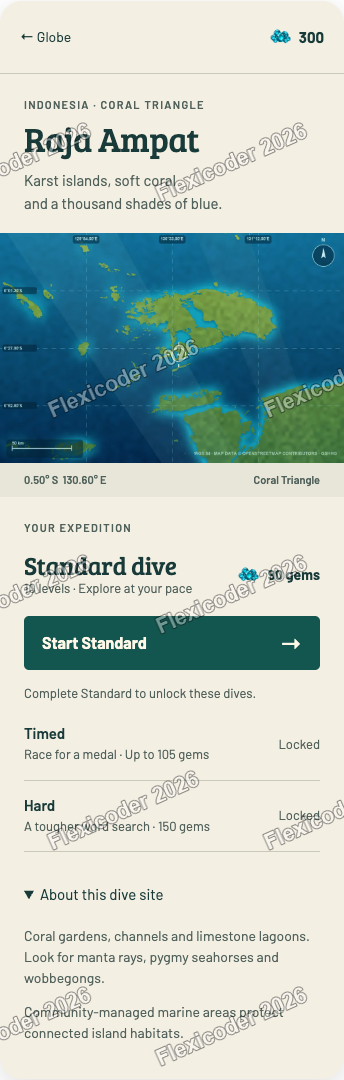
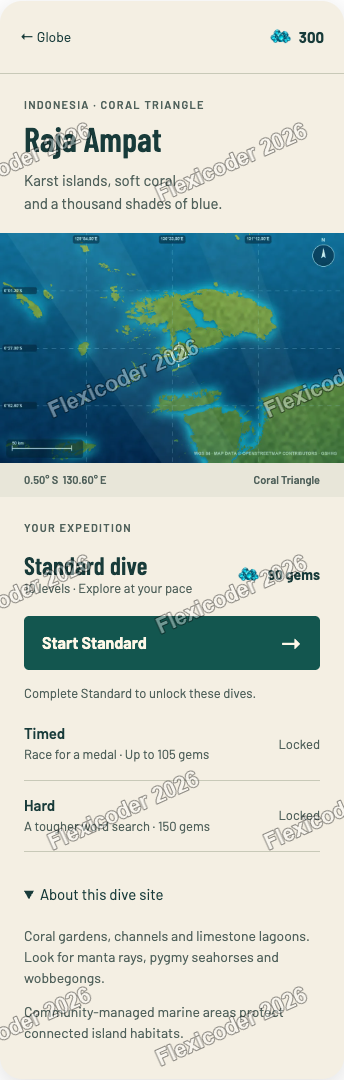
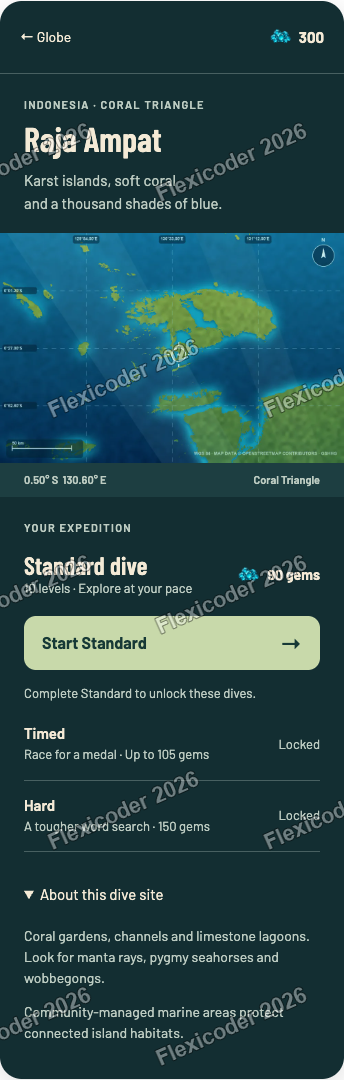
Outcome: The revised direction removed duplicate overlays, retained room panning and object interaction, clarified briefing and result hierarchy, and compared light, dark and expedition treatments. Feedback selected Barlow Condensed Semibold for headings with Barlow for body and controls.
Delivered
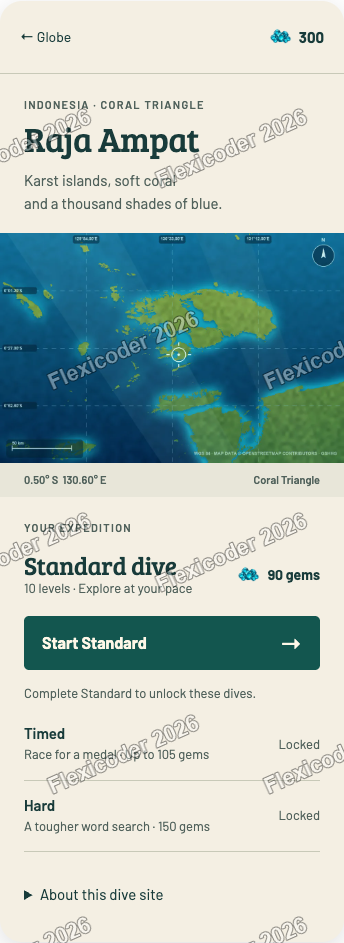
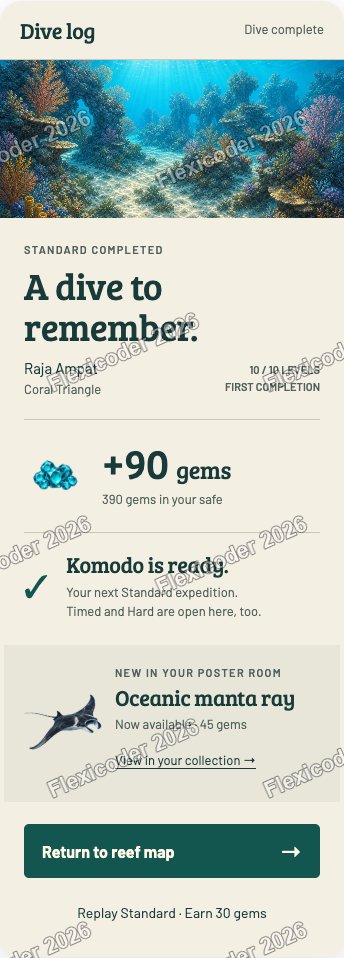
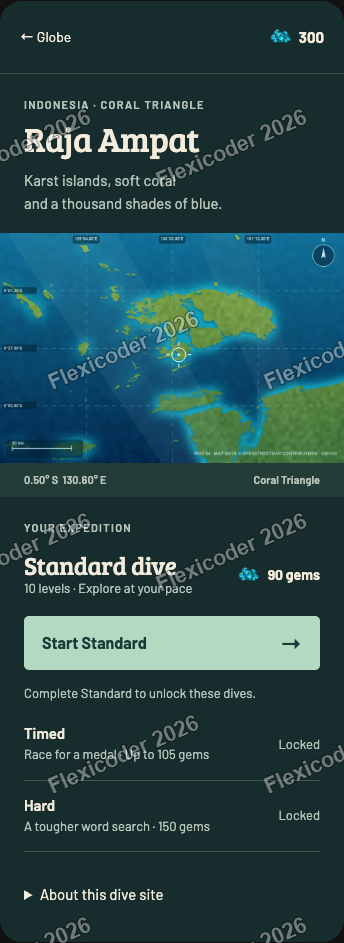
Briefings, results, settings and seven reef stamps became one tested native language
Prompt: Apply the approved typography and paper-and-ink direction to surrounding native screens while preserving gameplay, accessibility and reef-specific identity.
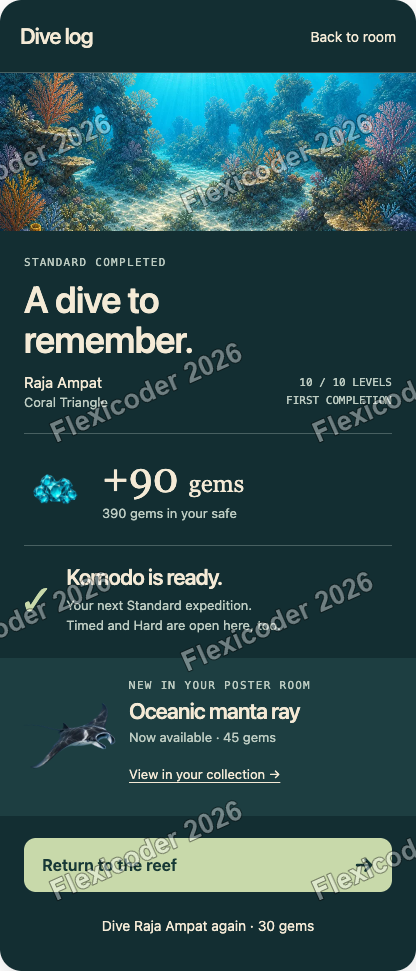
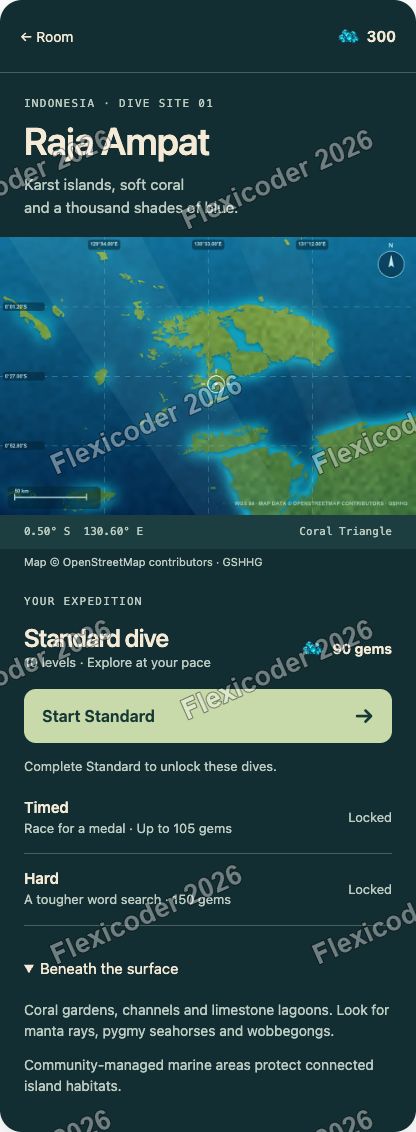
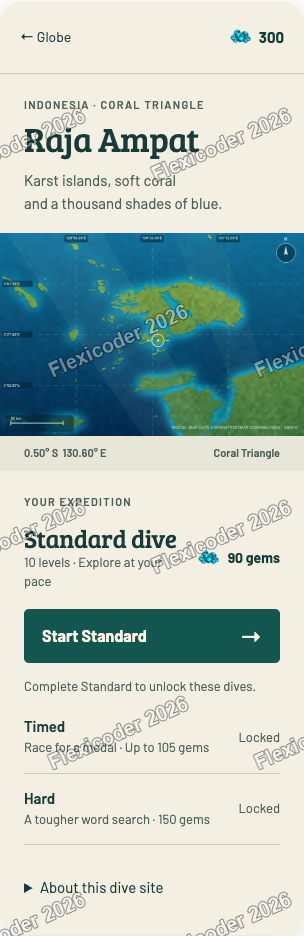
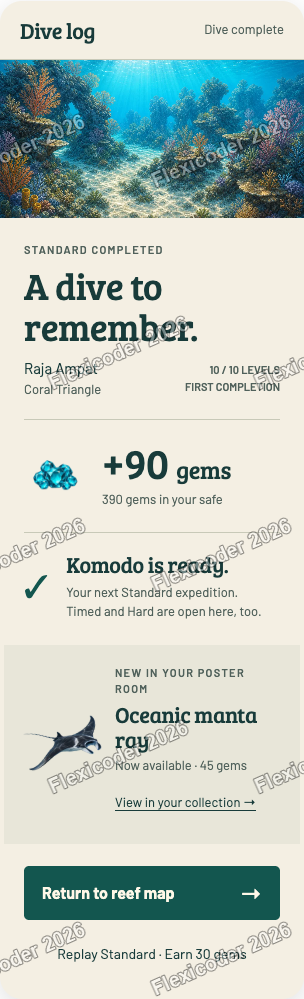
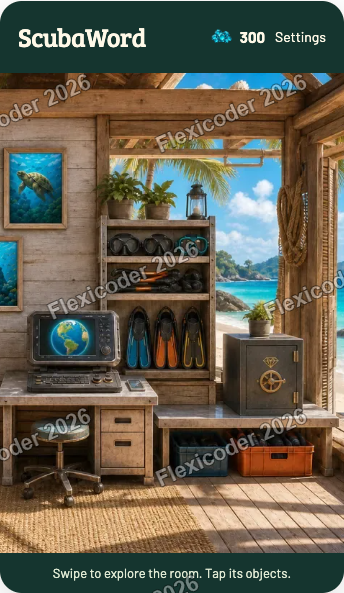
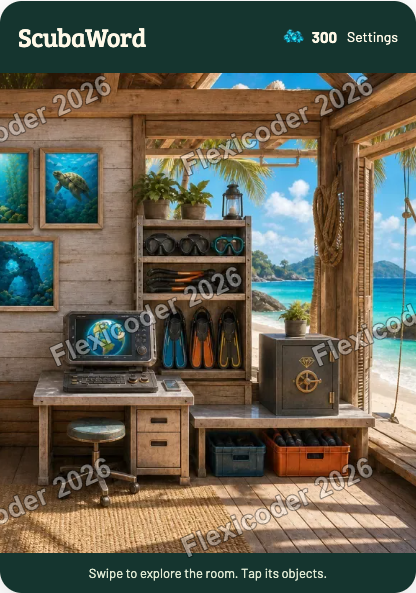
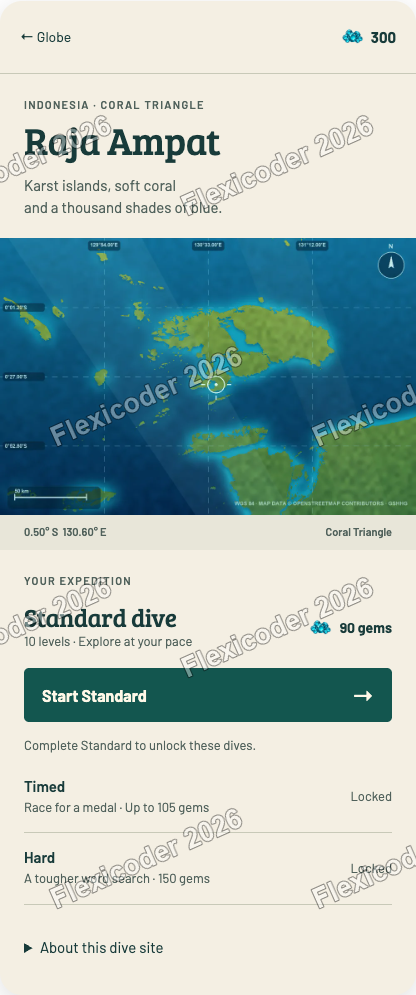
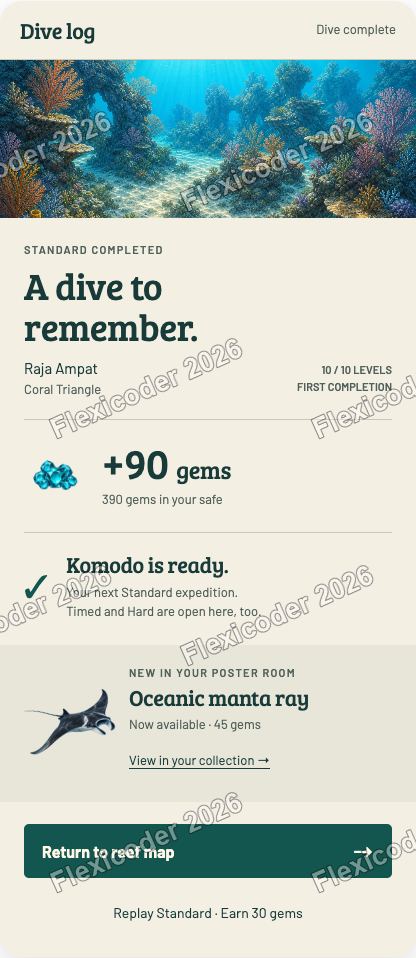
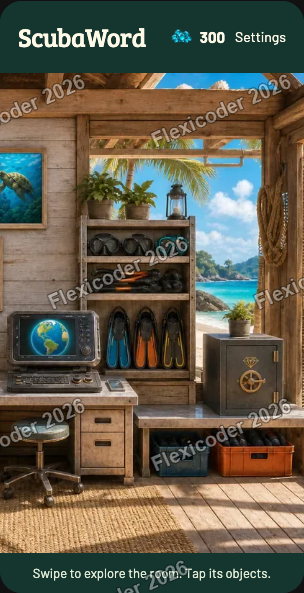
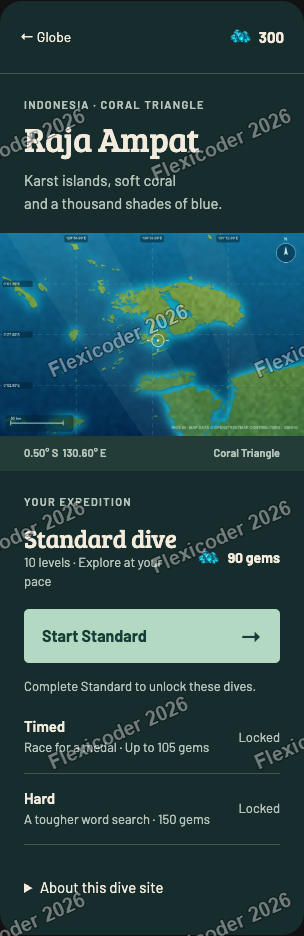
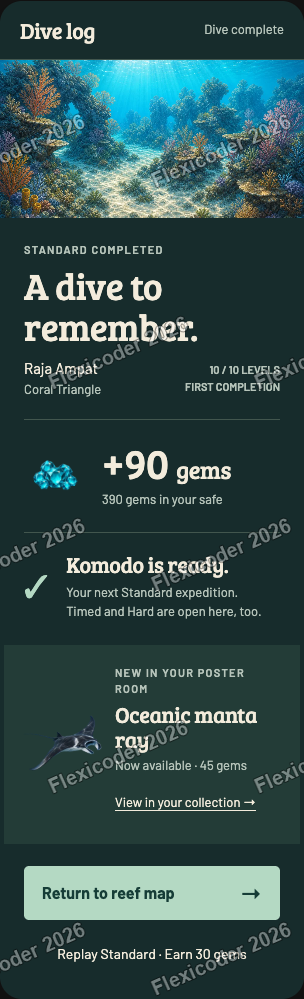
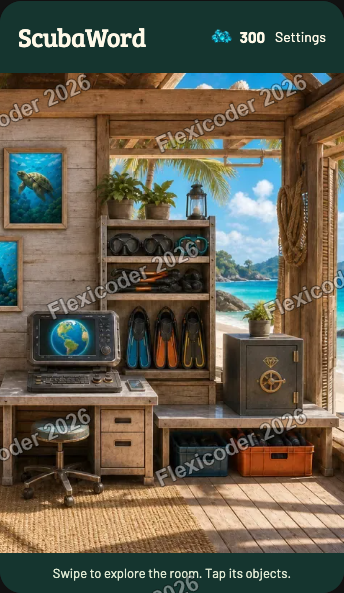
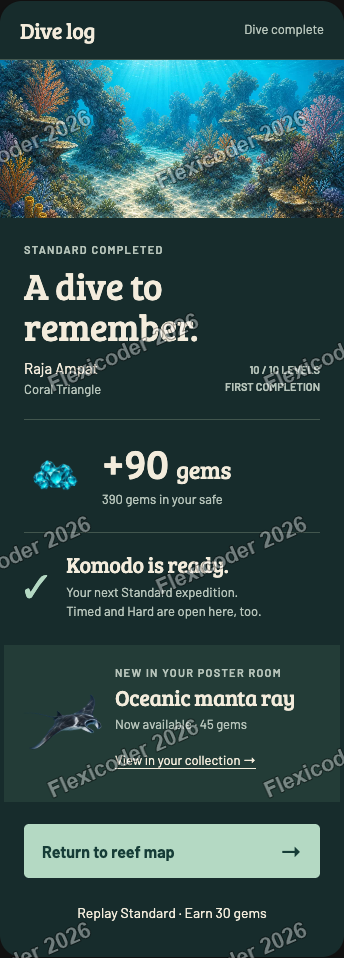
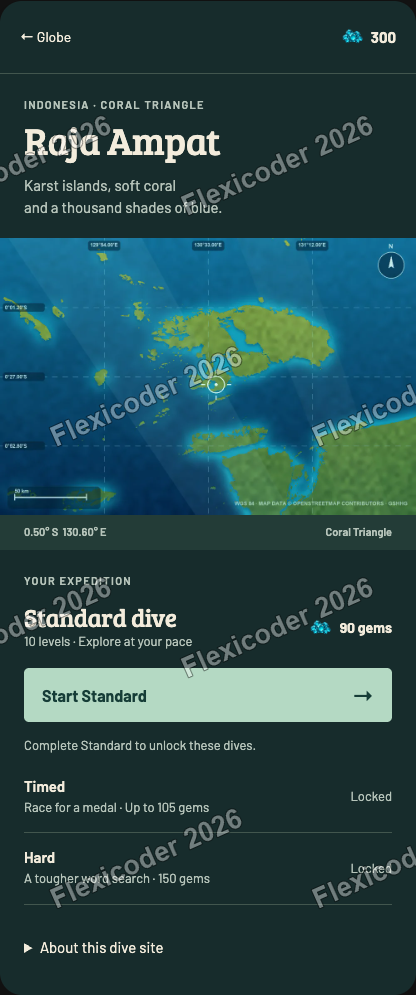
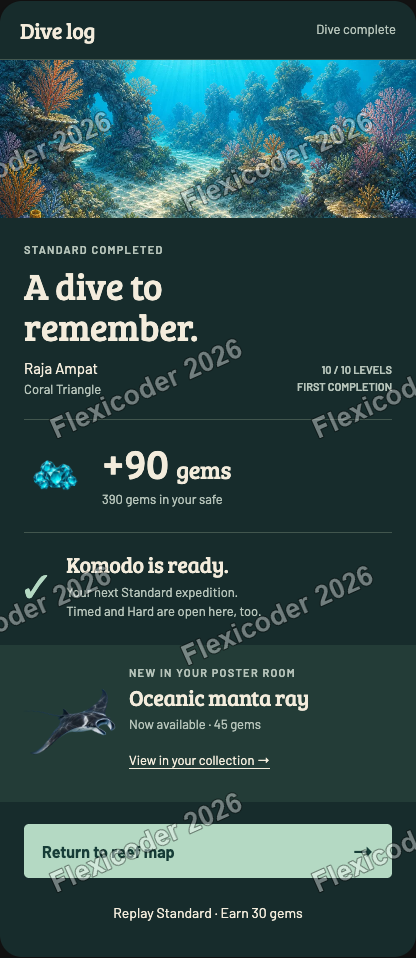
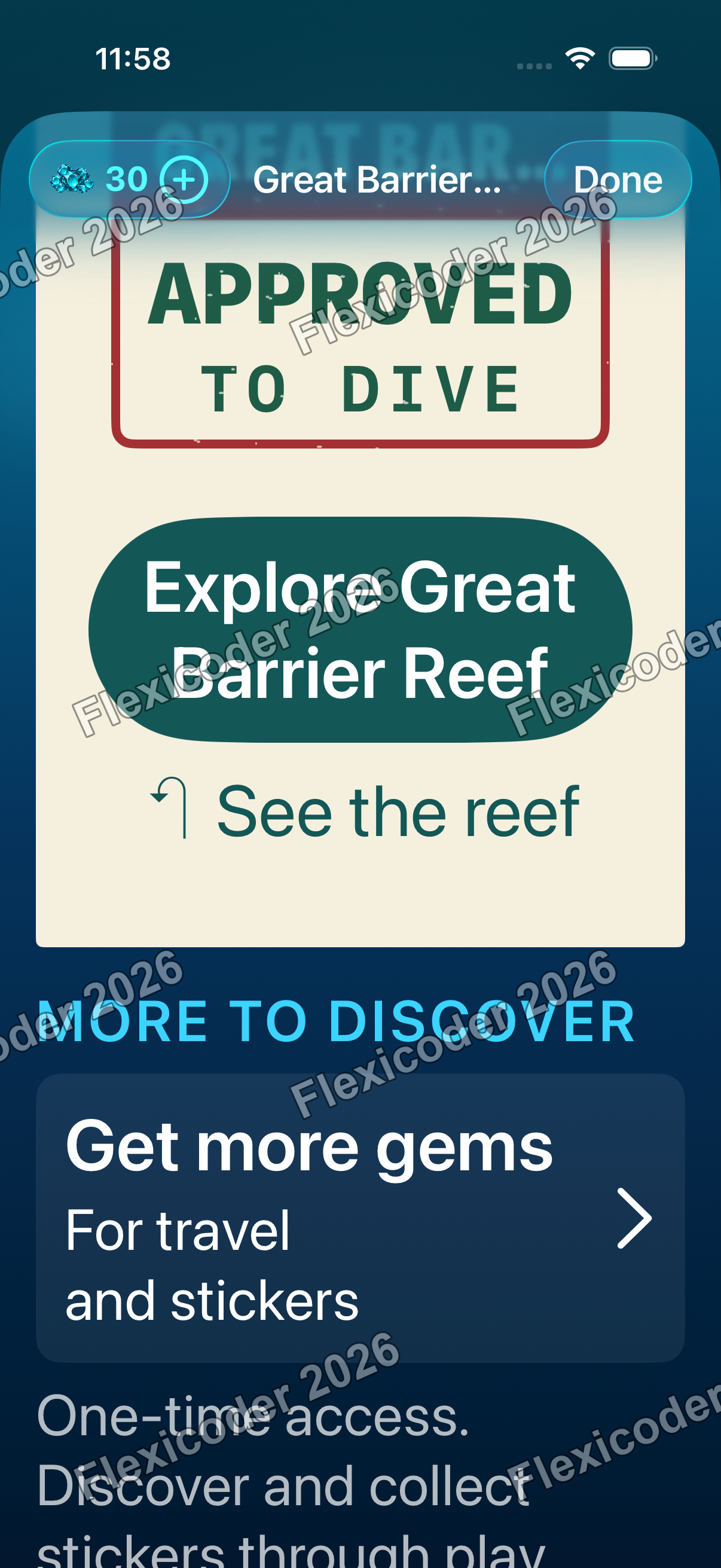
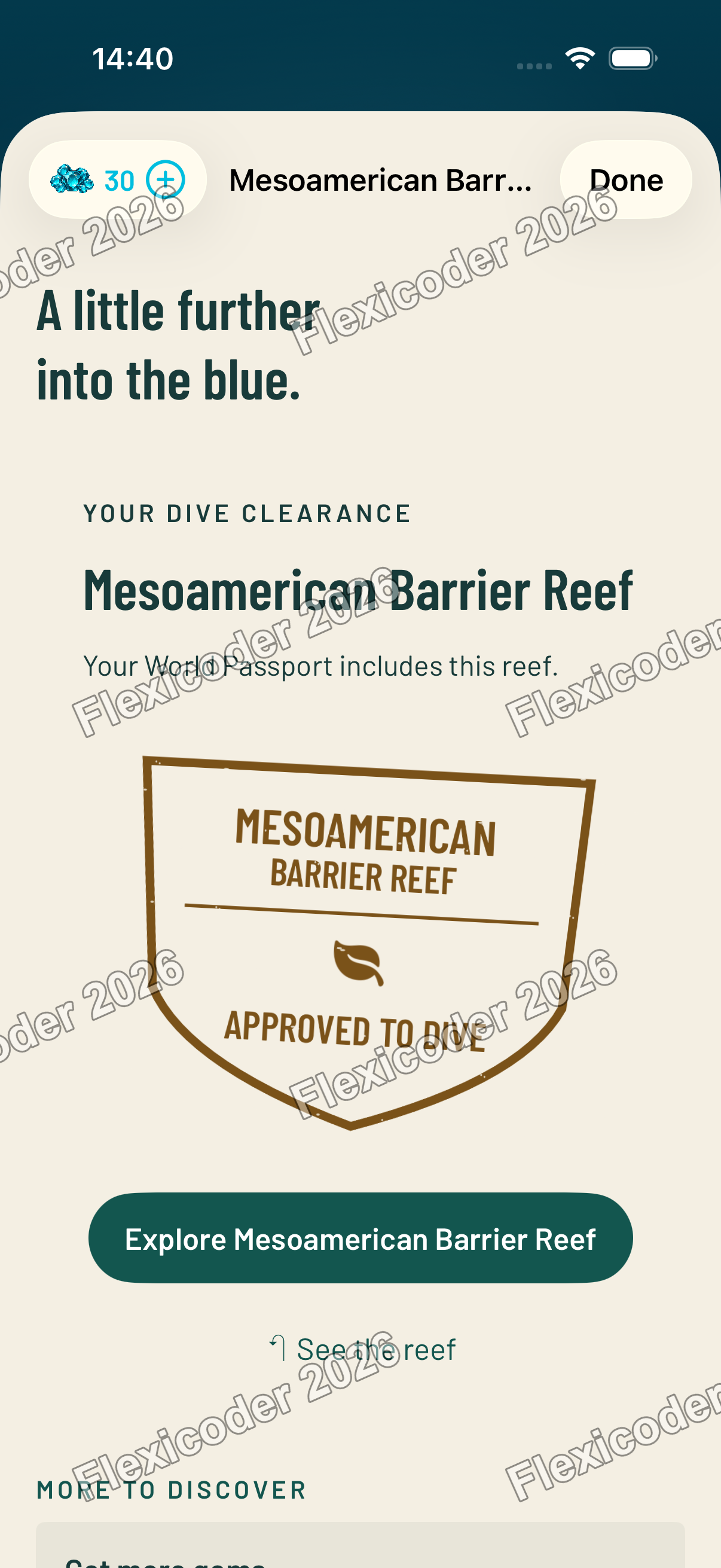
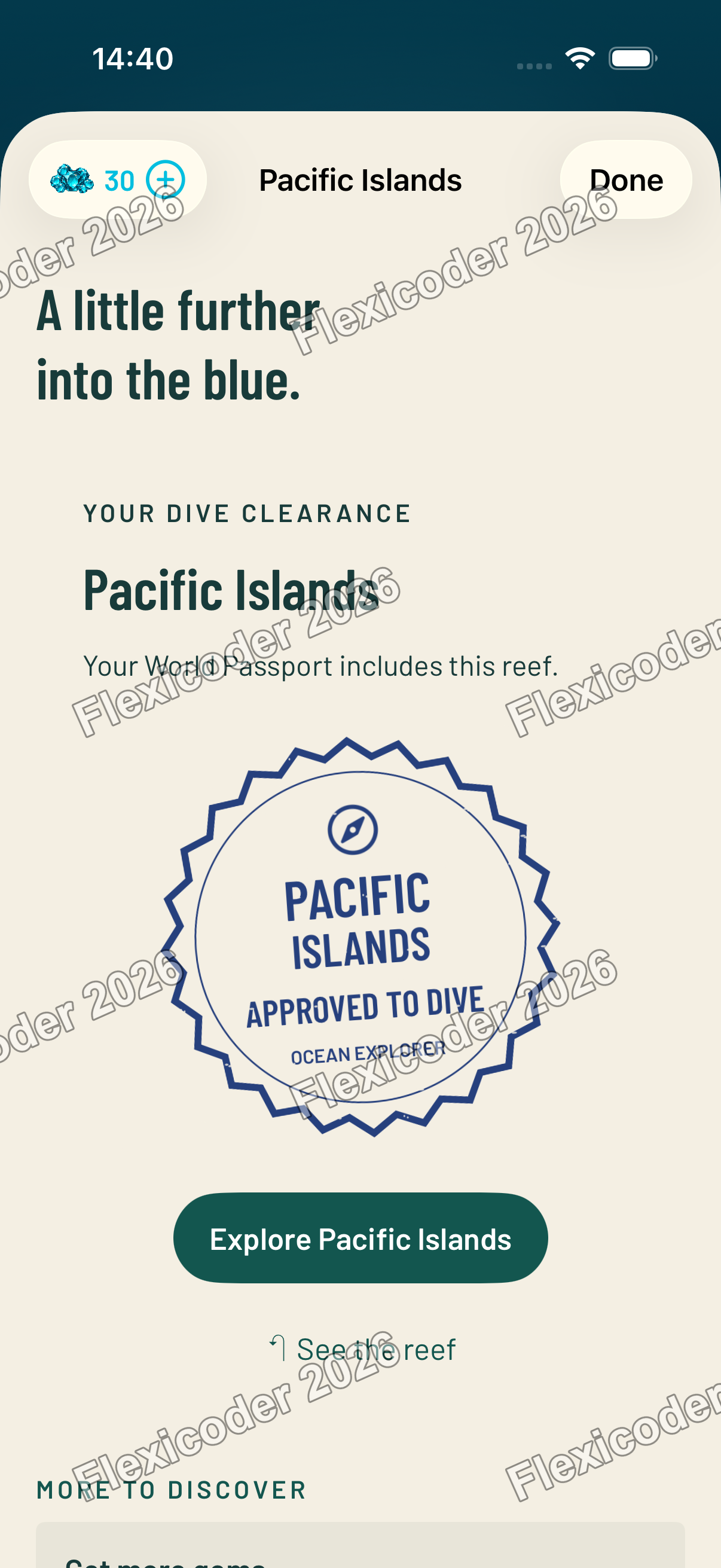
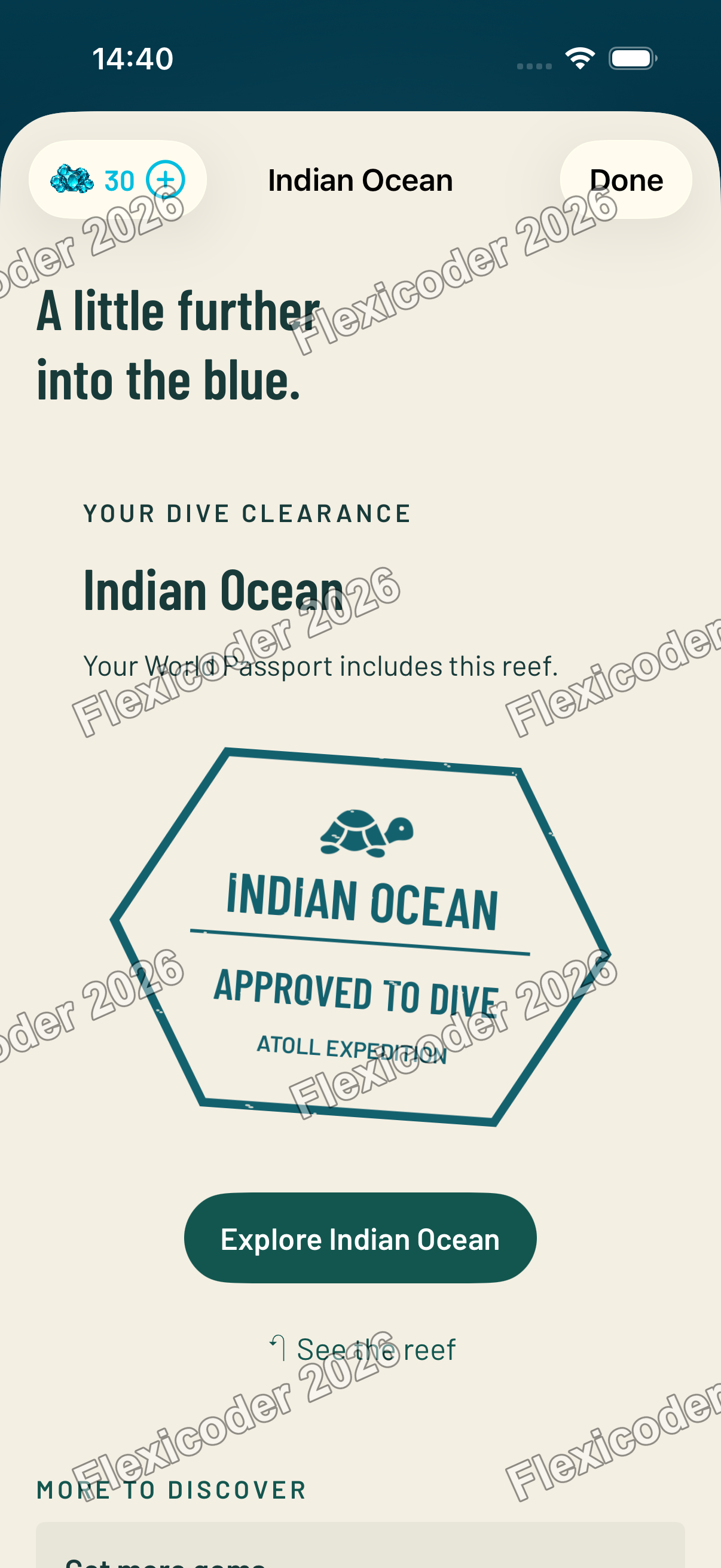
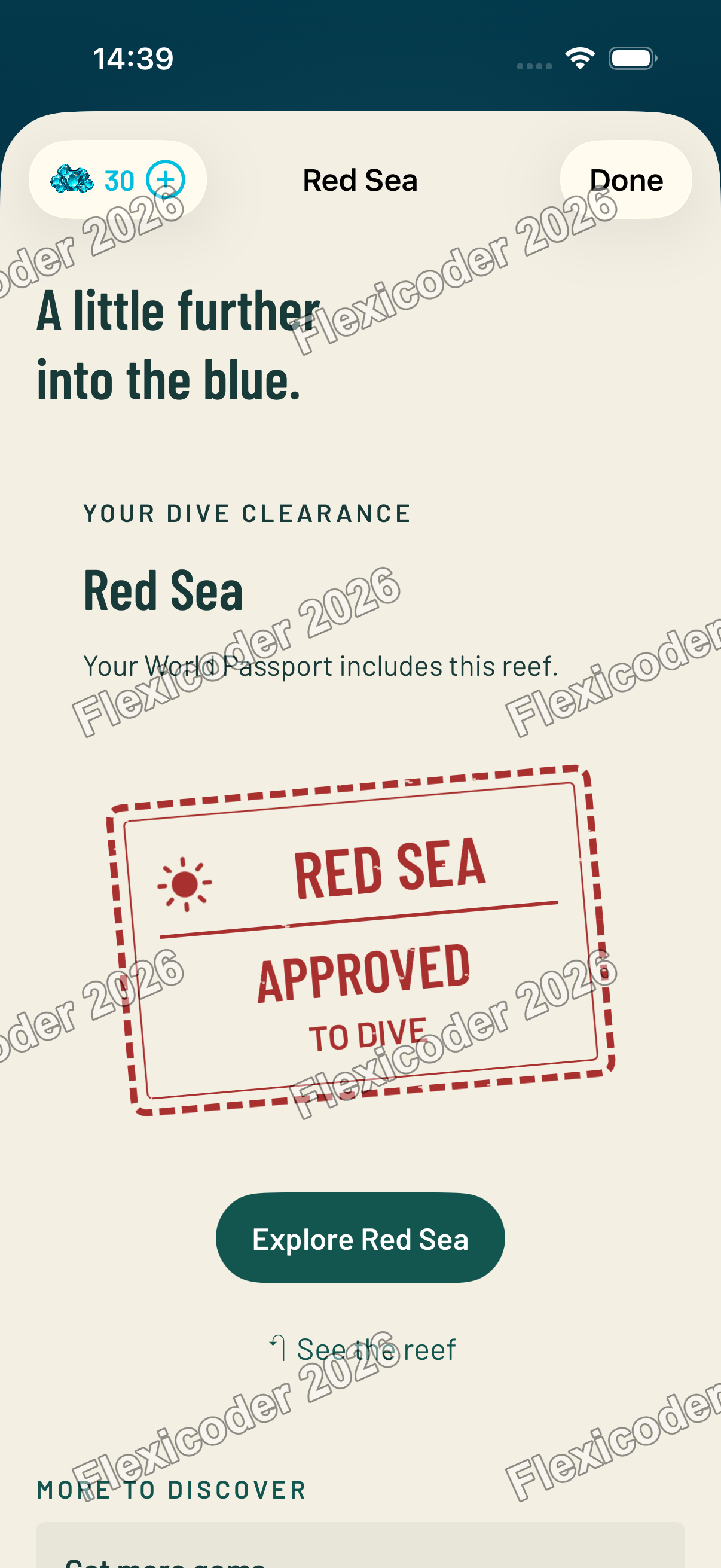
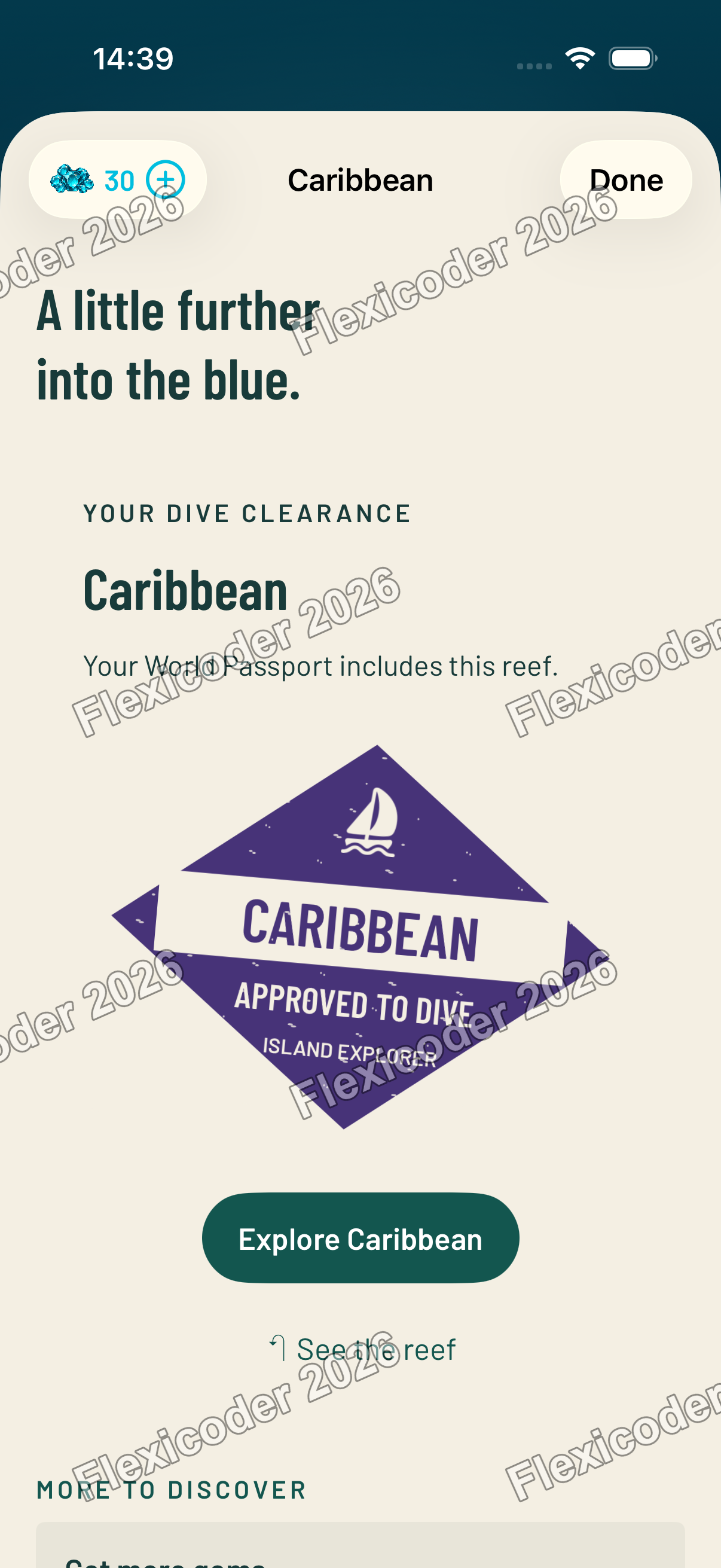
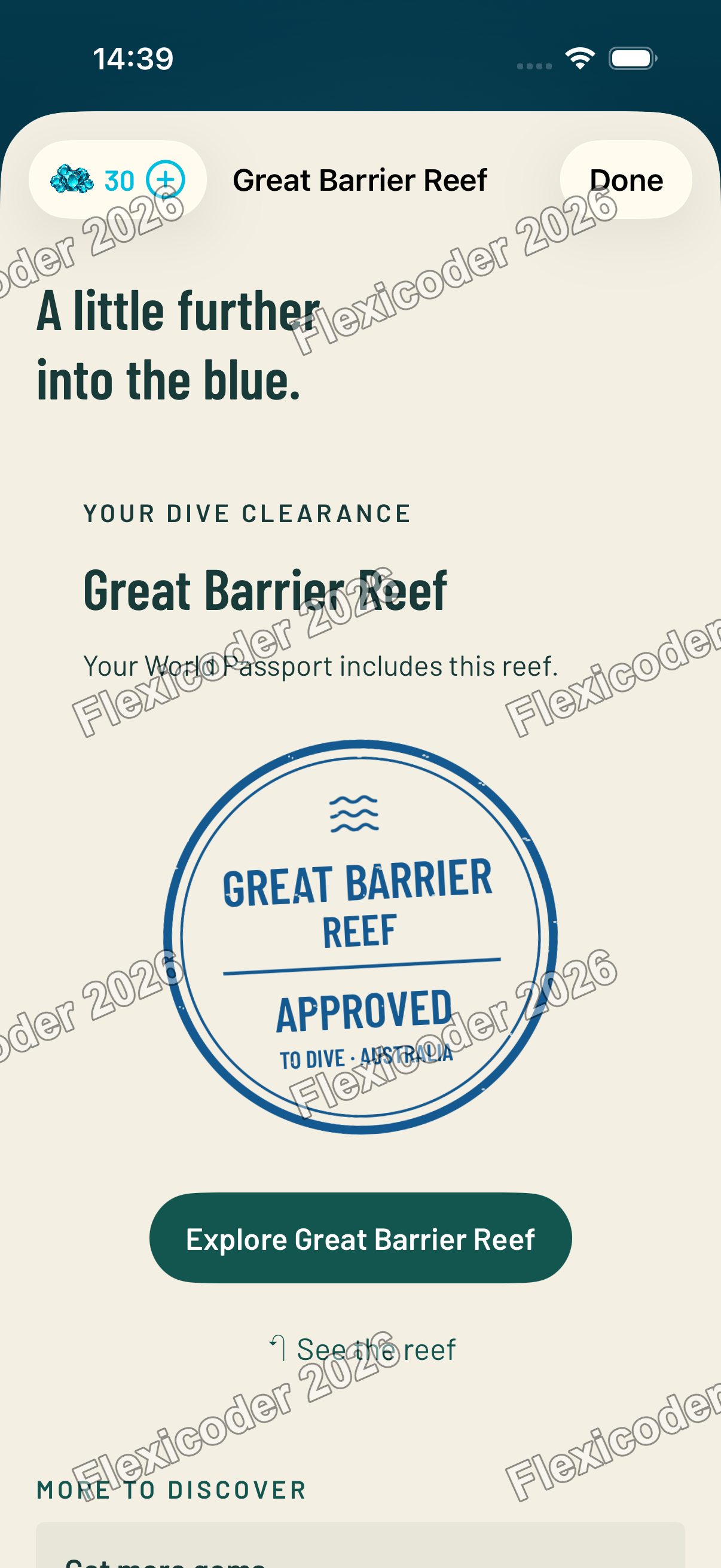
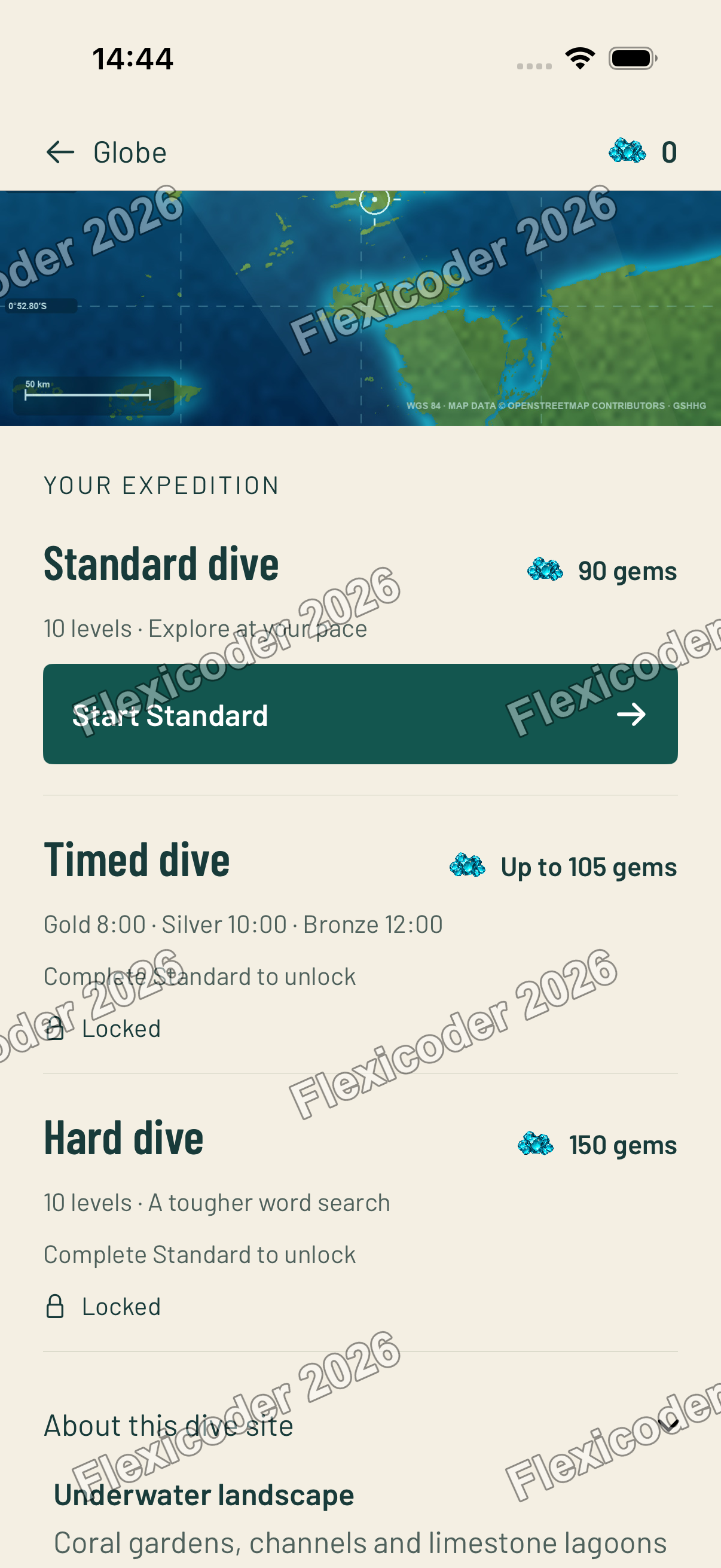
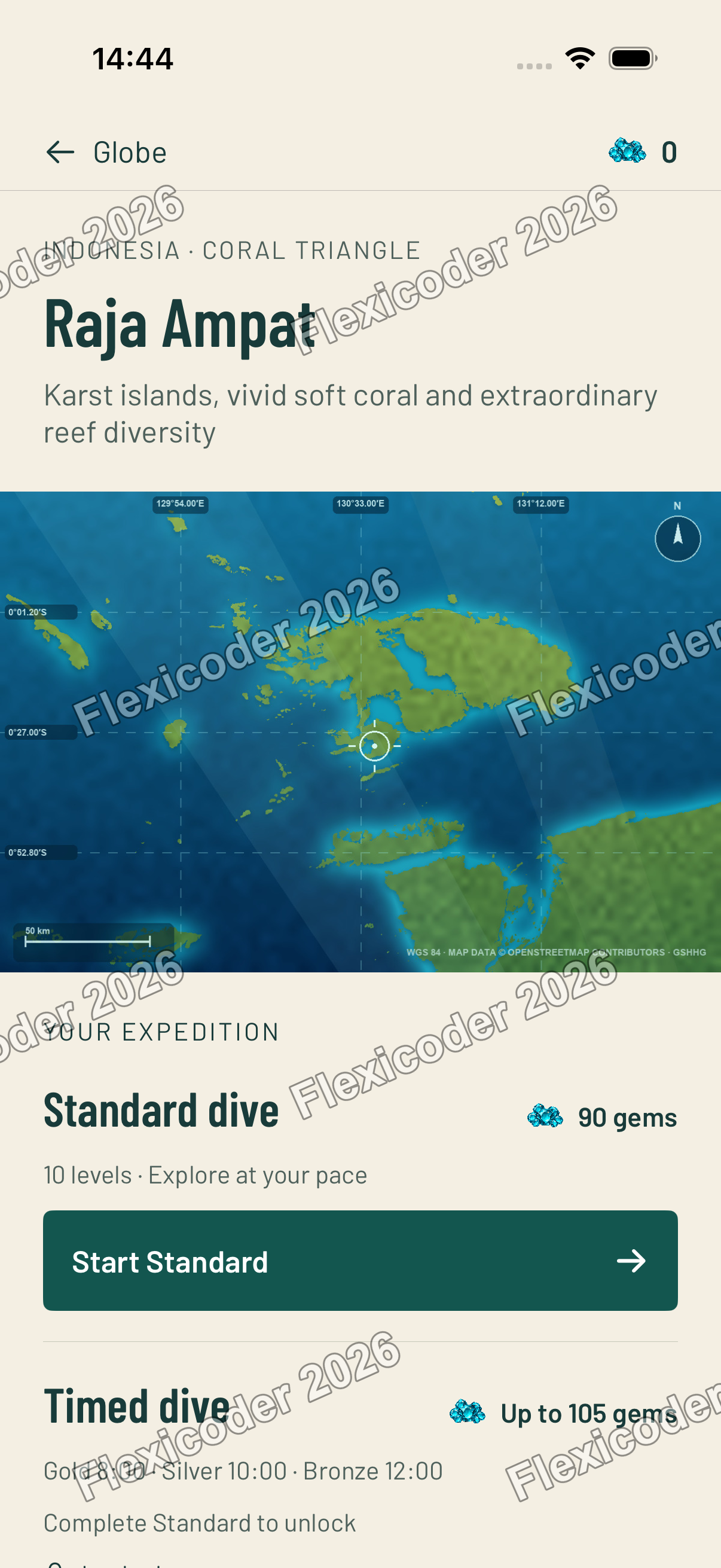
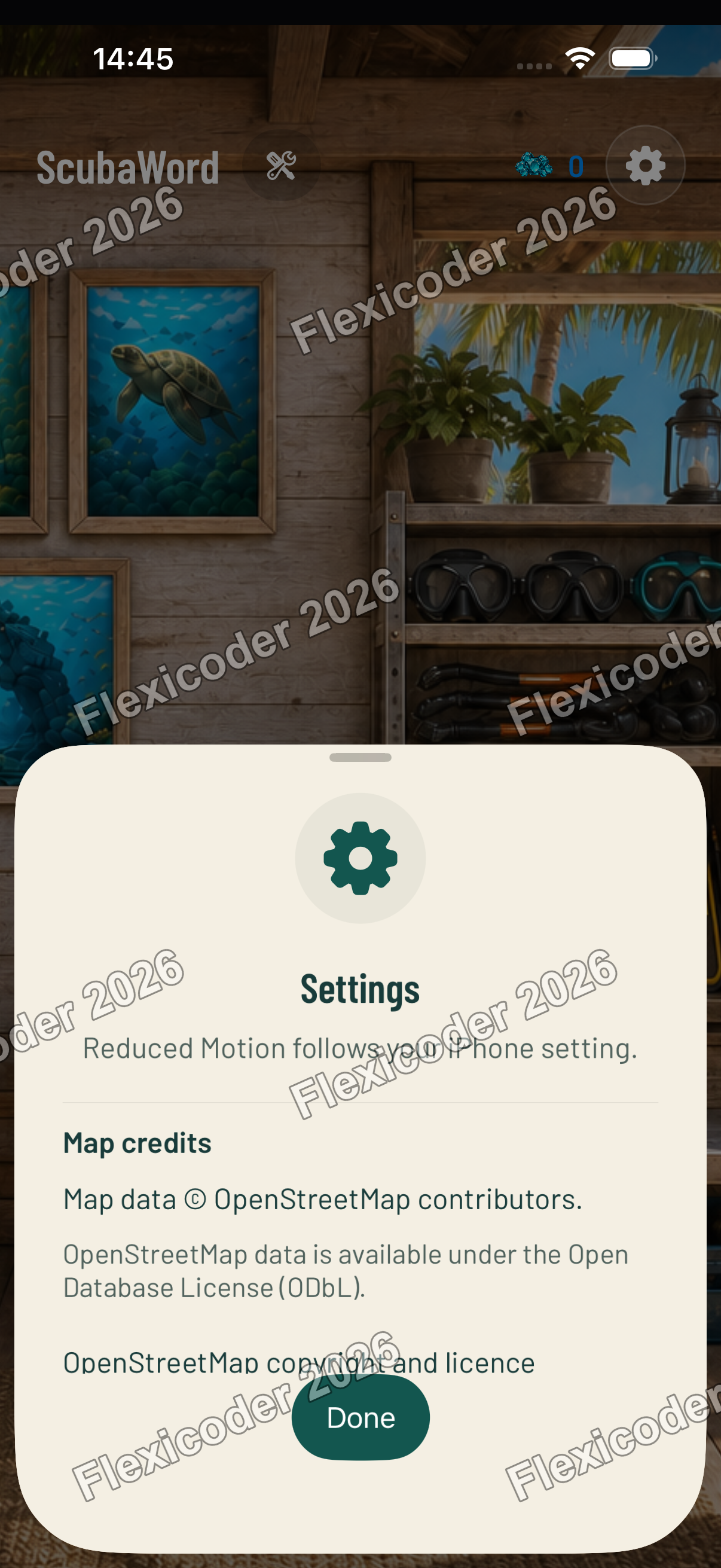
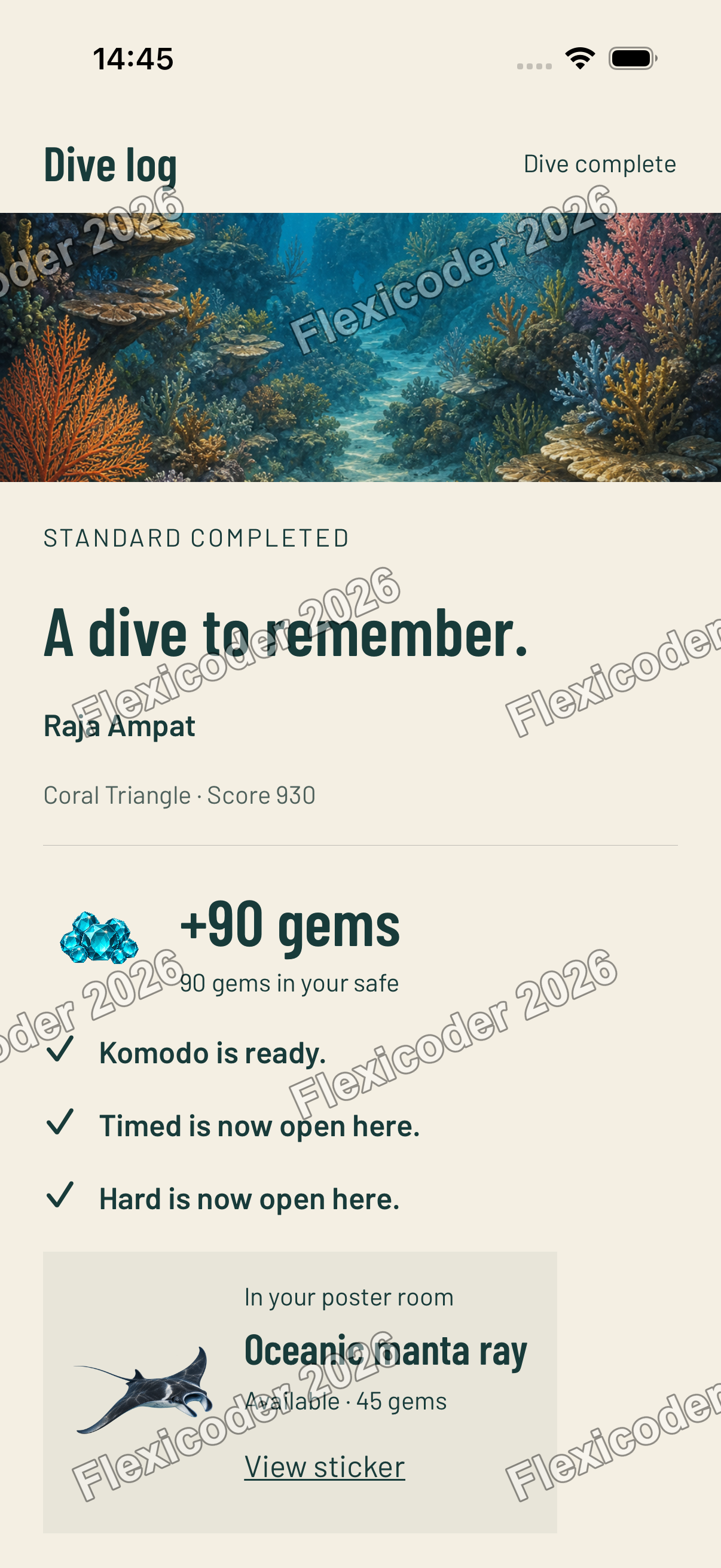
Outcome: Four bundled font faces, seven distinct approval stamps, an unnumbered site briefing, inline facts, map credits, the equipment room and a post-treasure dive log were implemented. Focused simulator builds, unit tests, UI journeys and visual captures verified the chosen direction.
Recommended
Poster criticism became an authored habitat collection strategy
Prompt: Fix implausible wildlife scale and placement, keep the wall poster as the collection entrance, and preserve the idea that a completed reef comes alive with video.
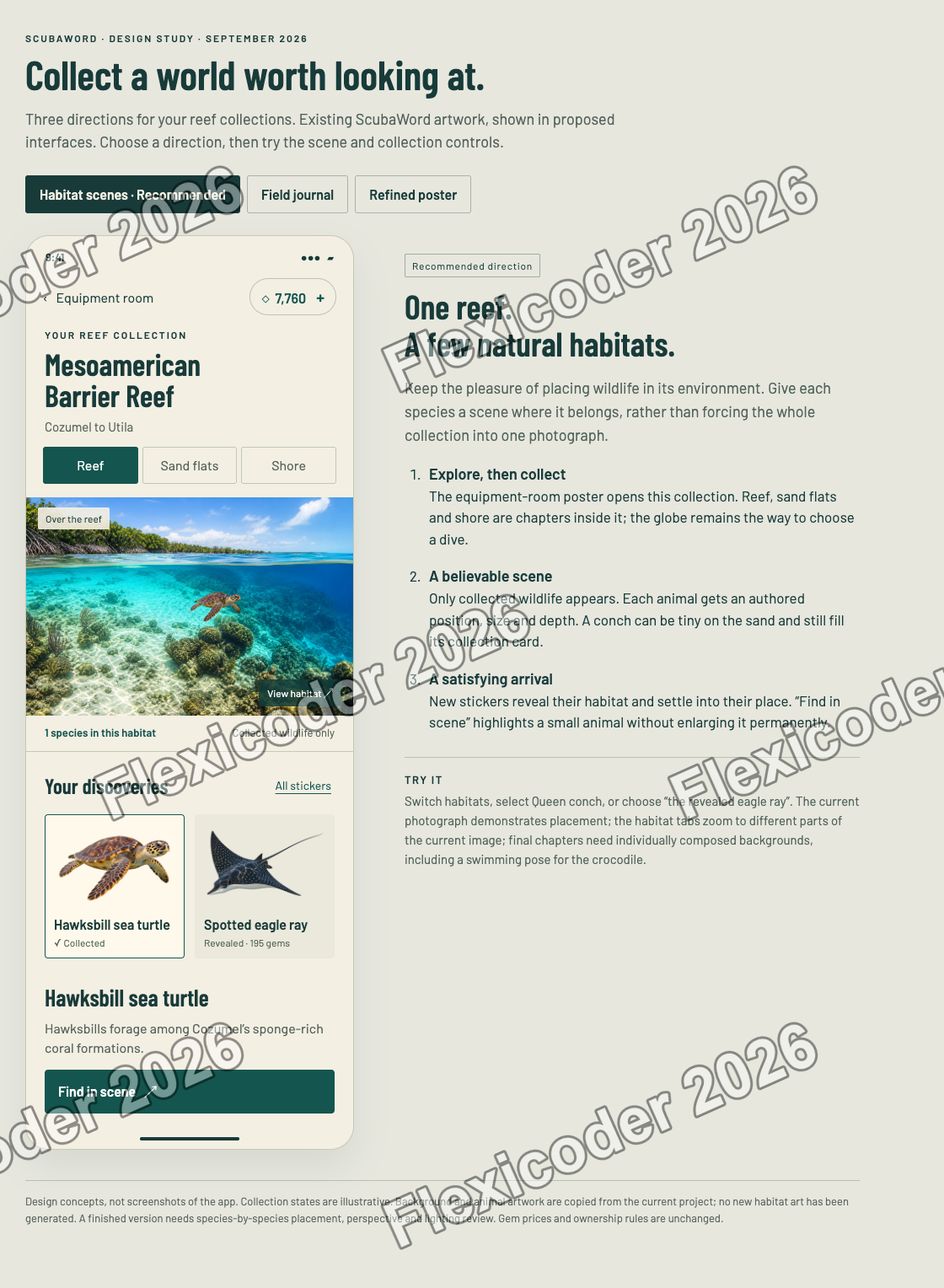
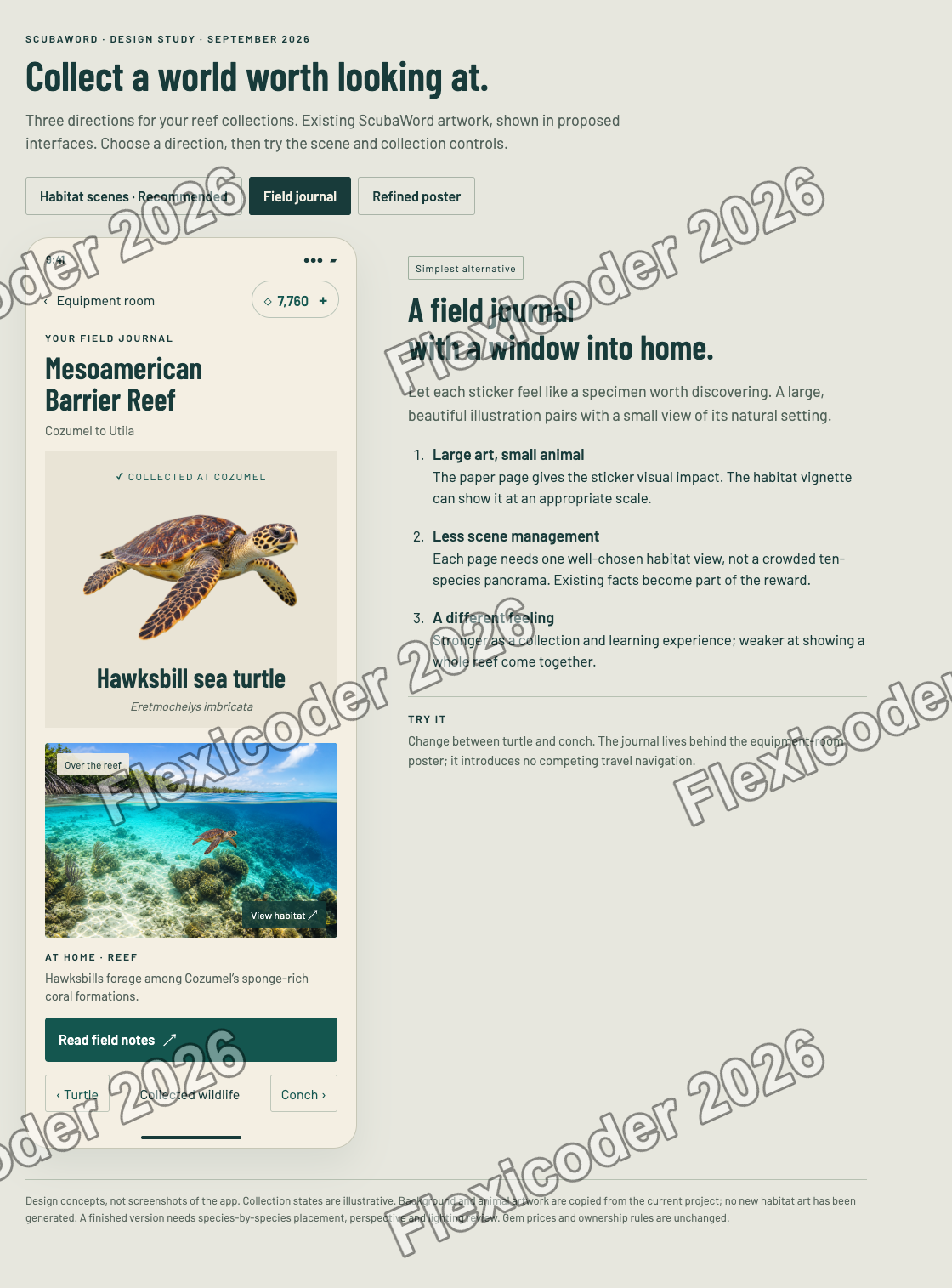
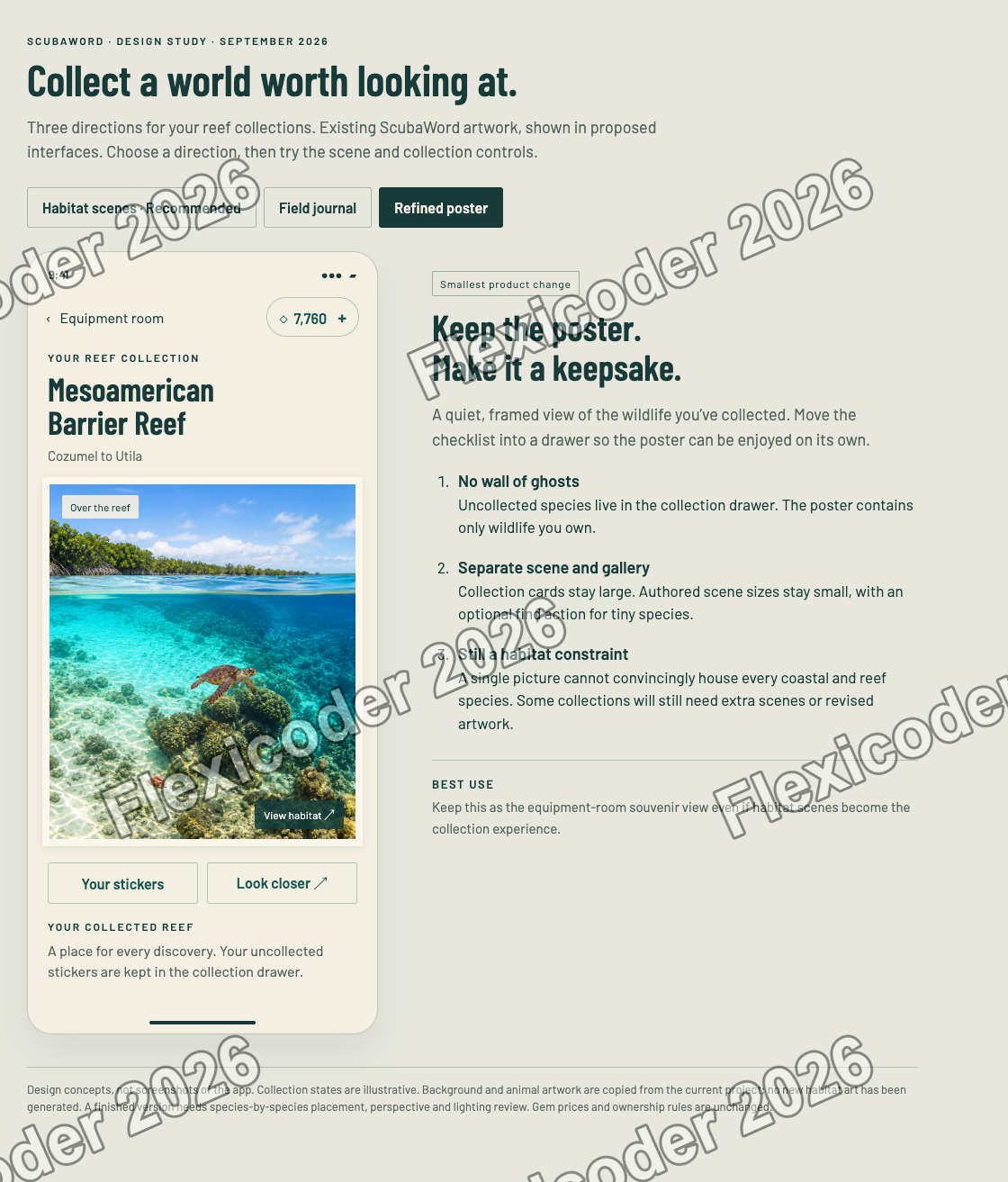
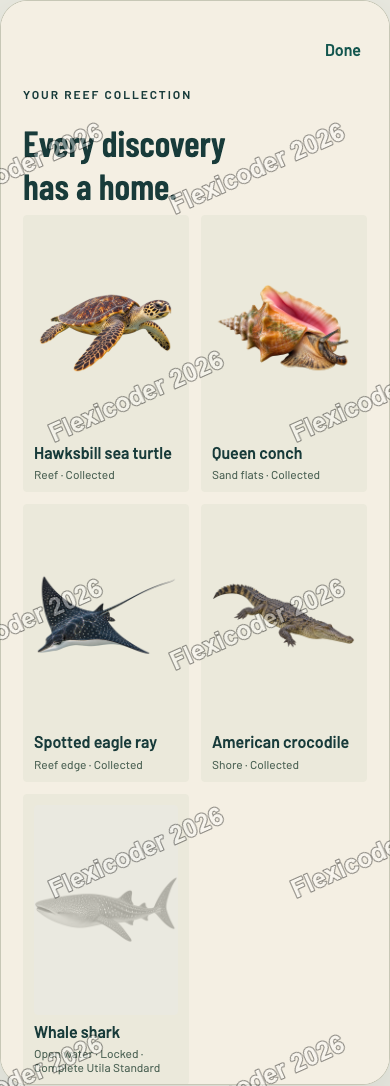
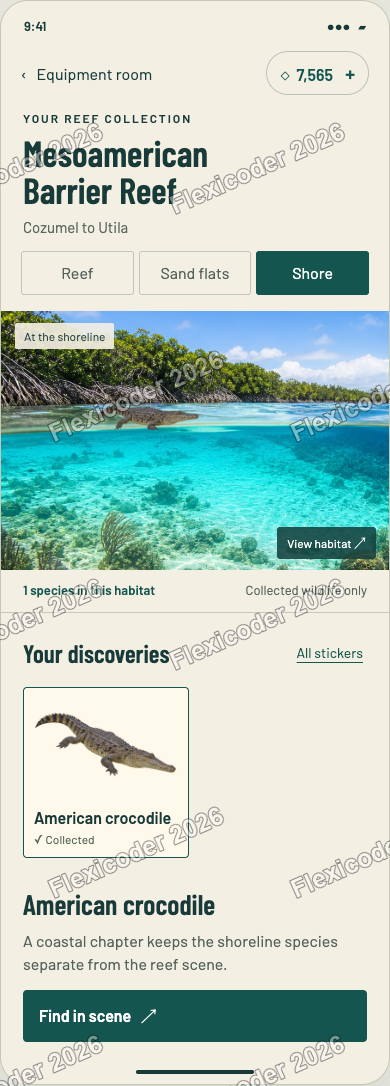
Outcome: The audit showed that shared coordinates put animals in sky, open water or unsuitable reef scenes. The recommended design uses reef-specific habitat chapters, owned wildlife only, large collection cards, explicit previews and authored placement. Completing all ten stickers unlocks living habitat clips and a continuous reef film without adding another charge.
What improved
Improvements made.
Evidence-led changes grouped around the product, implementation, design and working process.
Fairer progression economics
Normal play remains a complete route, while a one-time gem travel cost creates a meaningful sink without forced advertising or hidden pressure.
Access is independent from completion
Earned travel, a named visa or a world passport opens only the intended destination and never fabricates completed sites, rewards or sticker ownership.
Safer purchase interactions
Travel spending is confirmed, repeat access cannot charge again, pending and cancelled purchases grant nothing, and buying gems does not automatically spend them.
A clearer adventure path
The equipment room remains a place to explore, while the computer, globe, reef map, briefing and dive retain one understandable route without duplicate dashboard shortcuts.
Distinctive, accessible typography
Barlow and Barlow Condensed now unify reading, controls and display moments while preserving Dynamic Type and leaving board geometry untouched.
Reef-specific approval identity
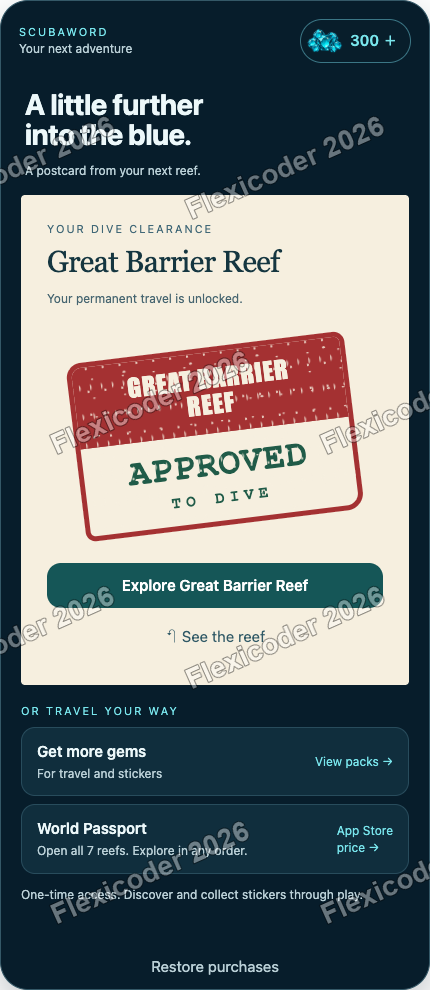
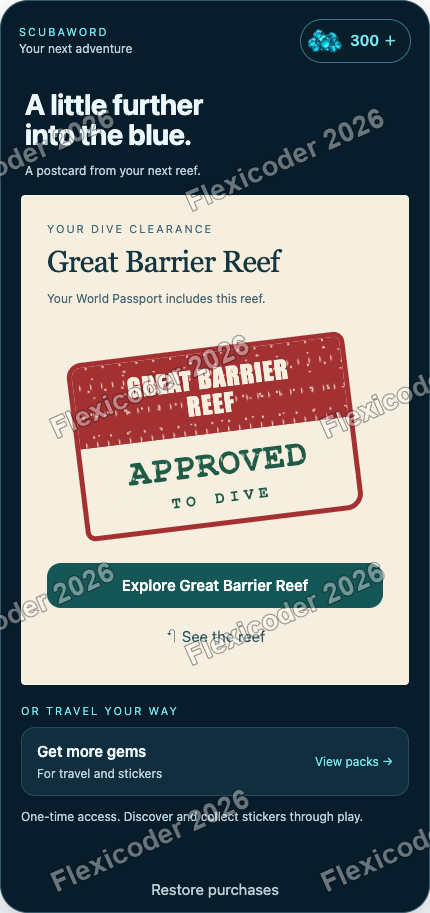
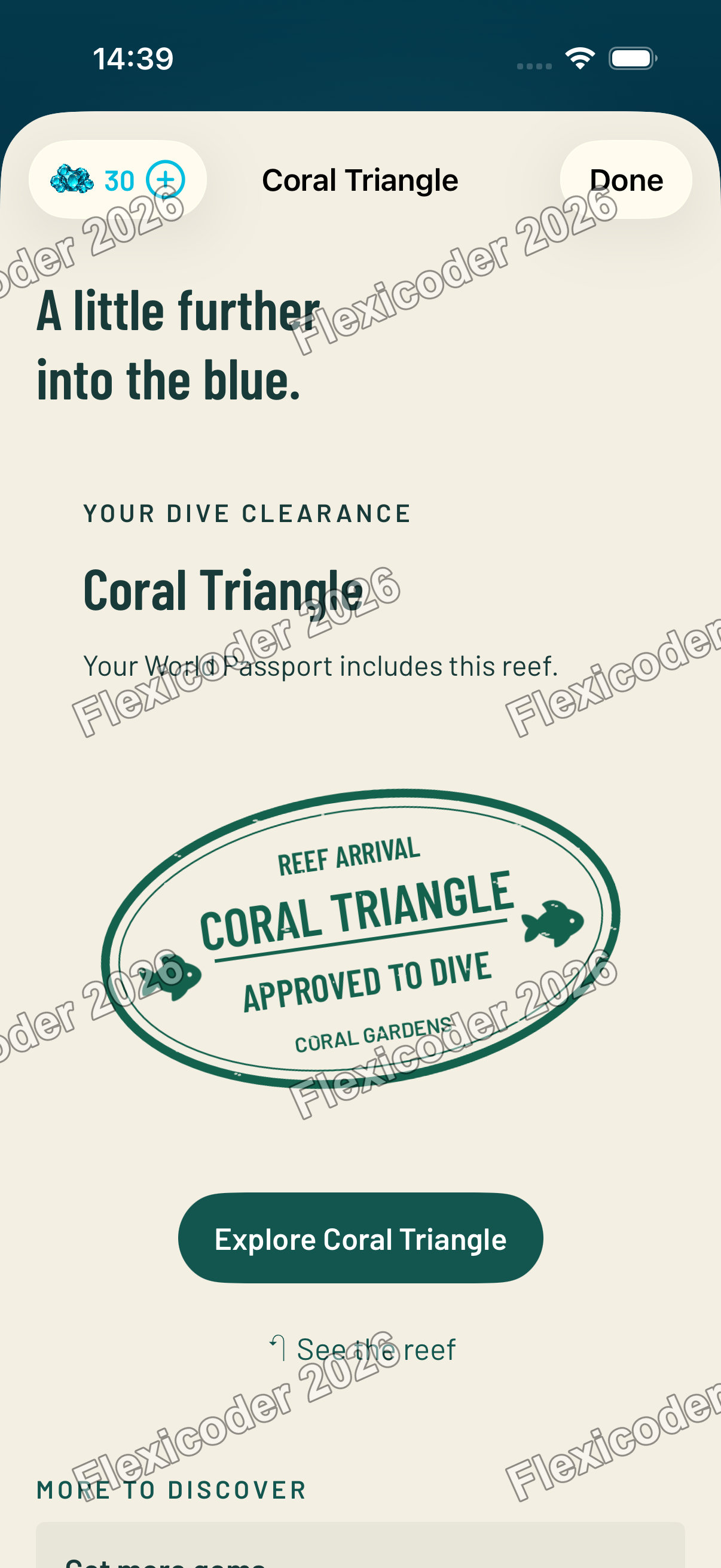
Seven individually shaped, coloured and rotated approval stamps make each destination feel collected rather than applying one generic badge everywhere.
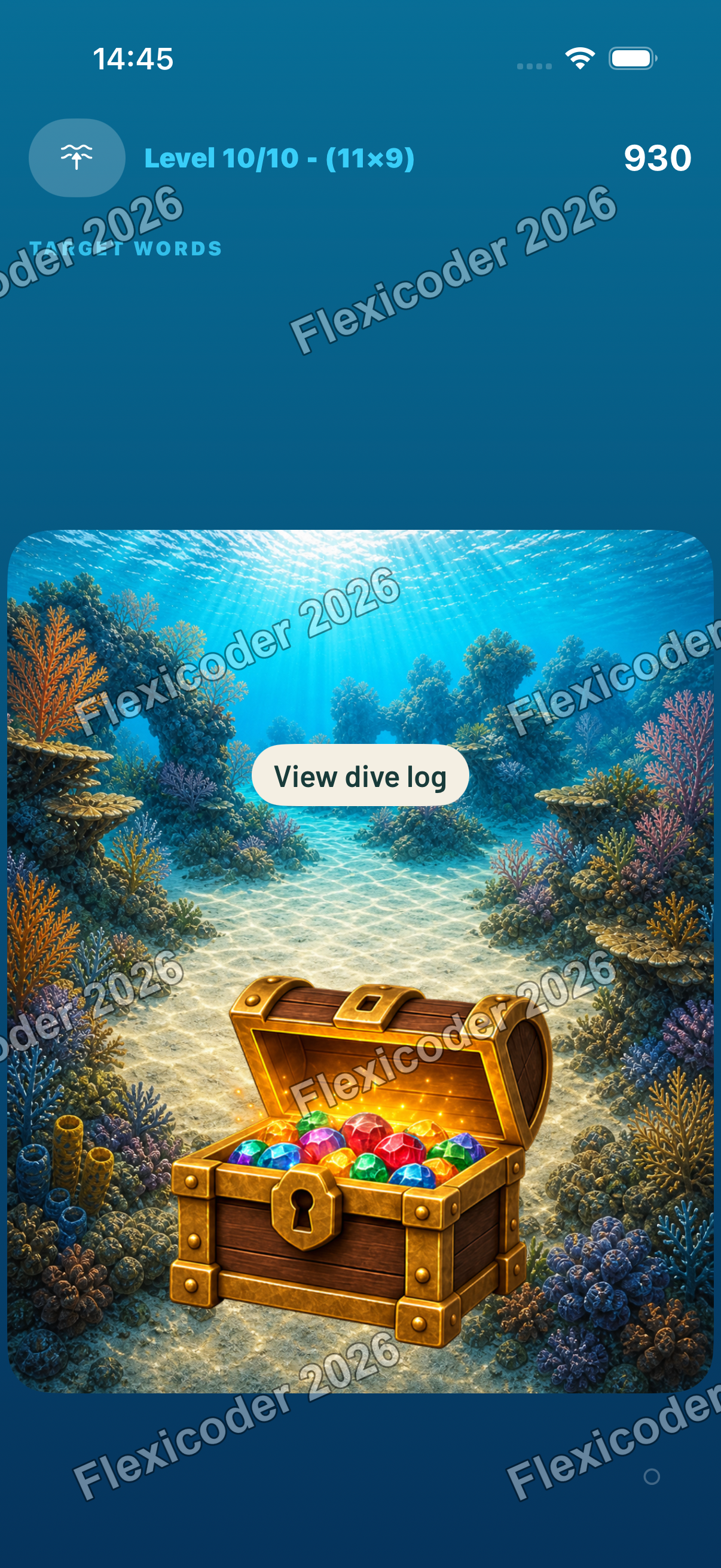
A more useful end-of-dive moment
The existing result flow now follows the treasure reveal with earned rewards, new availability, an optional collectible, replay and a route back to the reef map.
Believable collection presentation
Habitat chapters, authored scale, substrate contact, occlusion and large collection cards solve problems that a single shared poster coordinate system could not.
Pain points
Friction, constraints and open edges.
Resolved problems are separated from constraints and work that remains open.
Live commerce is deliberately still unavailable
The concepts and native flows do not configure store products, prices, accounts, paid entitlements, a wallet backend or transaction reconciliation. Release builds therefore offer no simulated paid access.
Focused checks are not full device acceptance
Simulator builds and targeted tests passed, but the complete test suite, physical-device performance, Instruments profiling, real purchases and device signing remain outside this interval.
Habitat scenes require authored compositions
Each wildlife asset still needs an approved habitat, scene-specific placement, scale, lighting and masking. A pilot must prove perspective and ecological fit before all seven reefs are produced.
The living-reef reward needs a representative video pilot
Short habitat clips should match completed still scenes and respect sound, pause and Reduce Motion. One transition should be validated before producing the full film set.
Outputs & proof
What was delivered and verified.
Evidence spans browser prototypes, native simulator captures, focused automated tests, release and debug builds, content audits and responsive checks. Claims remain limited to what those checks established.
Verification record
- The commerce prototype exercised postcard flipping, gem travel, pack grants, pending, cancelled and owned states with no script errors or narrow-screen overflow.
- The native postcard work passed 74 focused unit tests and six distinct UI journeys, including travel persistence, access approval, cancellation, accessibility settings and sticker purchase.
- The Barlow-led native pass passed debug and release builds, 43 focused unit tests and eight UI journeys covering all seven stamps and the surrounding navigation.
- The style study checked four screens across three widths, light and dark appearances, embedded fonts, room panning, facts, credits, replay and both typography directions.
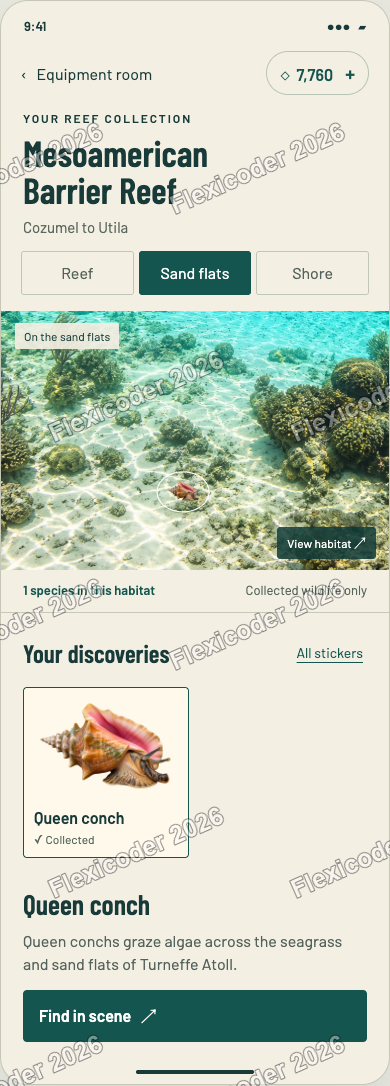
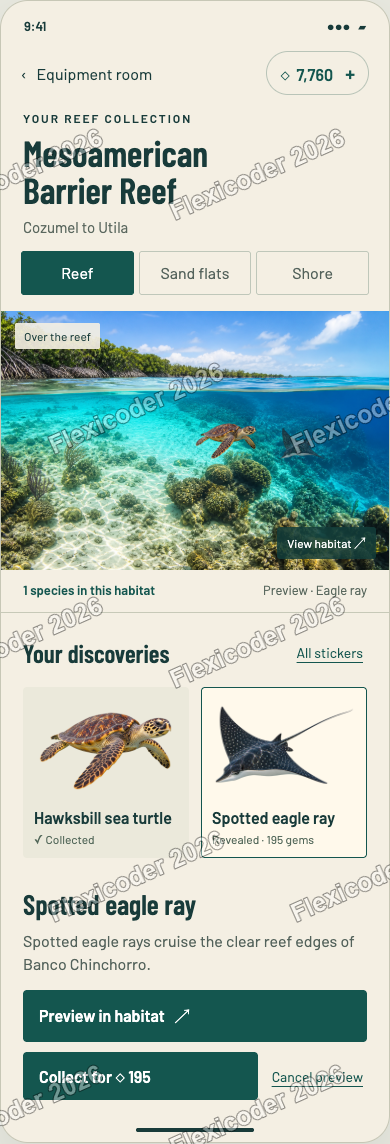
- The habitat concept passed wide and narrow browser checks, chapter switching, specimen selection, preview, purchase simulation, drawer interaction and scene highlighting.
Key decisions
Optional monetisation must supplement a complete play path; no urgency, forced ad prompt, automatic spend or disguised progression purchase was introduced.
Purchased access and completed gameplay remain separate facts, preserving existing progress and preventing entitlement restoration from inventing rewards.
The equipment room stays an explorable environment and the globe stays the destination selector; proposed shortcuts that obscured those roles were removed.
Barlow Condensed Semibold headings with Barlow body and controls replaced the earlier serif recommendation after direct visual review.
Only owned wildlife lives in habitat scenes; revealed unowned stickers may be previewed explicitly but do not clutter or silently alter the collection.
A completed reef unlocks living media as a collection reward, not as another paid feature, and still imagery remains available for accessibility and offline resilience.
Visual checkpoints
Generated and edited images.
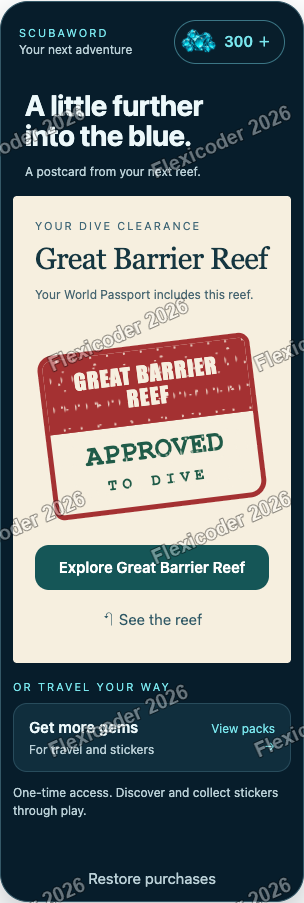
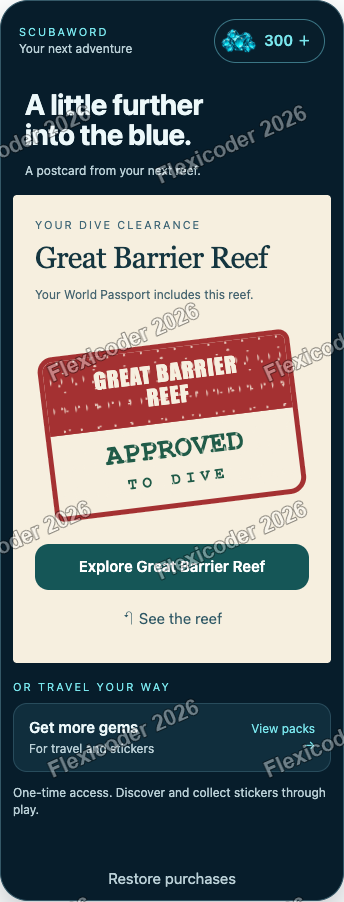
Seventy-one distinct visual checkpoints document the responsive commerce journey, typography and colour comparisons, native postcard and gem-safe implementation, seven reef approval stamps, native briefing and dive-log screens, and three collection directions with habitat interactions. These are generated browser or simulator captures; copied source artwork and the supplied video reference are excluded.

Next moves & open questions
Current position.
The economy principles, postcard travel, gem-safe access, Barlow visual system, seven reef approvals, site briefing and dive log are now represented in tested native work. The collection redesign is a validated design direction rather than app code. Live commerce, authored habitat art, living-reef video and full physical-device acceptance remain the next major boundaries.